Why Do AI Data Centres Need So Much Water and Power?
AI systems that generate text, create images and analyse information run on computing equipment inside data centres. As their use expands, more electricity is needed to operate that equipment. The heat produced also has to be…
AI systems that generate text, create images and analyse information run on computing equipment inside data centres. As their use expands, more electricity is needed to operate that equipment. The heat produced also has to be removed, which can create a demand for water as part of cooling.
A new assessment in the journal Patterns estimates that AI systems could account for approximately 313 billion to 765 billion litres of water consumption worldwide in 2025, including cooling and the generation of their electricity. That broad range reflects assumptions about AI's power requirements and the water associated with them, rather than a measured global total. Companies rarely disclose enough information to separate AI's footprint from their other activities. [1]
Understanding this demand requires considering what happens inside the building and where its electricity comes from. Water used for cooling is only part of the total, and a cooling method that saves water at the facility may require more electricity elsewhere.
The Power Behind AI Data Centres
Data centres contain servers, storage and networking equipment, along with the systems needed to keep them working. AI uses specialised processors for large numbers of calculations. Developing a model from data is called training, while using it to produce an answer or prediction is called inference. Both processes consume electricity. [2]
A model continues using energy after training because each request requires more computation. How much it uses depends on the model and the task. Research comparing applications found that general-purpose generative models could consume substantially more energy than specialised models doing the same task. As a service reaches more users, the choice of model helps determine how much energy those requests require. [3]
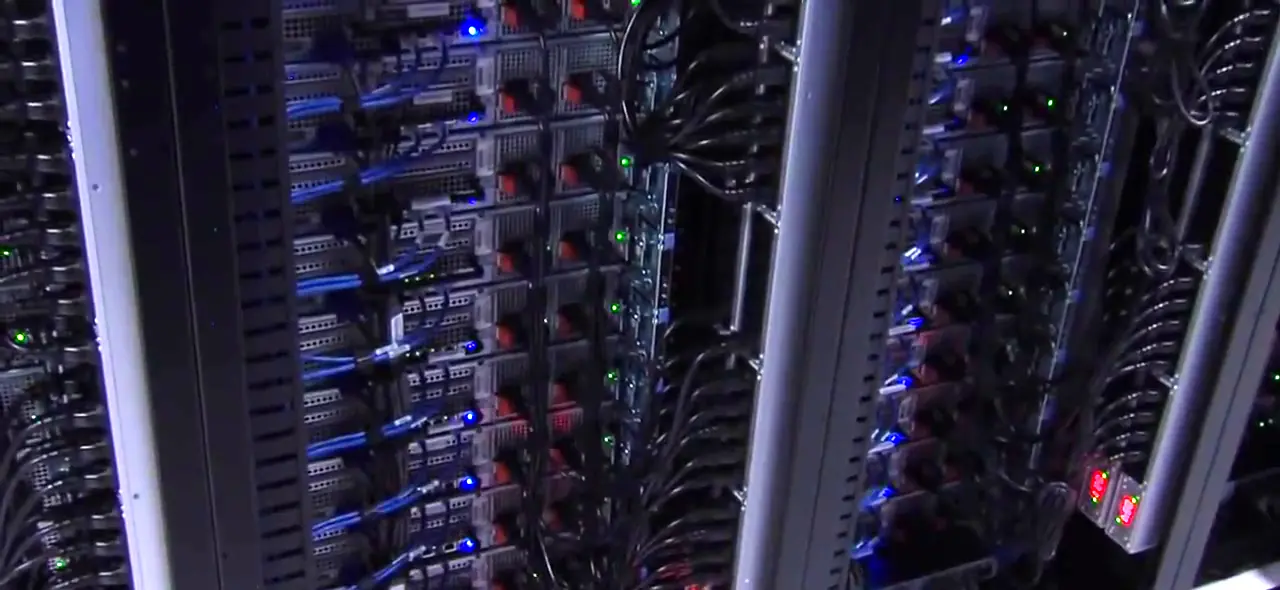
An illustrative photograph of data-centre server equipment, taken in 2015.
Credit: HenryNewman12 / Wikimedia Commons; brightened by Kittycataclysm, CC BY-SA 4.0.

Across all data centres, the International Energy Agency estimates electricity consumption reached around 415 terawatt-hours in 2024, about 1.5% of global electricity use. Its central projection puts consumption at roughly 945 terawatt-hours by 2030, with AI an important driver of growth. These figures cover the entire data-centre sector, including ordinary cloud services, rather than AI alone. The future total also depends on how quickly AI expands, how efficiently systems operate and whether the necessary energy infrastructure can be built. [2]
How Cooling Creates Water Demand
Processors release heat as they operate, and cooling systems transfer it away to keep the equipment within its operating temperatures. Some facilities circulate air through server rooms, then use heat exchangers to move the collected heat into water. Cooling towers can release that heat outside by allowing some of the water to evaporate. [4]
Changing water from liquid to vapour carries heat away. The remaining water can circulate again, but the evaporated portion must be replaced, so reusing water does not mean that a system consumes none. Facilities that use more outside air or different cooling equipment have different water requirements.
Water withdrawal and water consumption measure different parts of this use. Withdrawal is the amount taken from a river, aquifer or another source. Consumption is the portion no longer readily available for another local use, including water lost through evaporation. Water returned after use is accounted for differently from water consumed. [5]
Evaporated water still belongs to the wider water cycle, but it may not fall as rain in the same place or at the time the community needs it. The location and timing of its return matter for people sharing the original supply.
The Water Footprint Beyond the Building
Water demand also follows the electricity supplied to the servers. Many power stations use water to remove heat, so a data centre may depend on water consumption elsewhere even if it uses little at its own site. The amount depends on the electricity-generating technology and how the power station is cooled. [4]
The scale of this indirect demand is substantial. Lawrence Berkeley National Laboratory estimated that US data centres directly consumed about 66 billion litres of water in 2023. It put their indirect water footprint from electricity use at nearly 800 billion litres, based on the regional electricity mixes serving the facilities. Both estimates cover all US data centres, not just those running AI. [6]
A facility’s water meter cannot show this full operational demand. When comparing cooling methods, the assessment needs to include changes in electricity use as well as water saved on site. Otherwise, a lower reading at the building may hide increased water consumption at power stations.
Manufacturing chips and constructing infrastructure add further resource demands. The Patterns estimate focuses on operating AI systems and excludes hardware manufacturing, so it should not be read as a complete accounting of AI's environmental costs. [1]
Pressure on Local Supplies
The effect of a new data centre depends on the water source and electricity network serving it. A region may have enough resources overall while a particular source or connection has little capacity left for new demand.
Virginia's legislative research commission illustrates the difficulty. Its assessment found that data-centre growth would require substantial new electricity generation and transmission infrastructure. Although data centres were paying their allocated utility costs under the rates examined, the commission warned that meeting their expanding demand could increase costs for other customers. It also identified economic benefits, especially from construction, and substantial tax revenues for some local governments. [7]
The assessment described Virginia’s overall data-centre water use as sustainable at the time, but also found differences in local availability and wide variation between facilities. Cooling design, computing density and building size all affect demand. Calling a region ‘water rich’ does not establish whether the source supplying a particular development can meet its needs.
Planning a project requires comparing its proposed demand with the systems expected to supply it. Communities also need to understand who will pay for expansion. National consumption figures provide context but cannot resolve those local questions.
Cooling With Less Water
Reducing demand starts with how heat leaves the chips. Cold plates place coolant channels close to the processors, allowing liquid to collect heat directly. Other designs immerse equipment in a fluid that does not conduct electricity. A life-cycle assessment published in Nature found that the advanced cooling systems it examined could reduce both energy demand and water consumption relative to its air-cooling baseline. The results depended on the technologies and conditions being compared. [8]
Liquid cooling describes how heat is collected near the chips, but does not fully explain how much water a facility consumes. The circulating coolant and the equipment that releases heat outdoors are separate parts of the system. Even a closed loop needs a way to discharge the heat it carries.
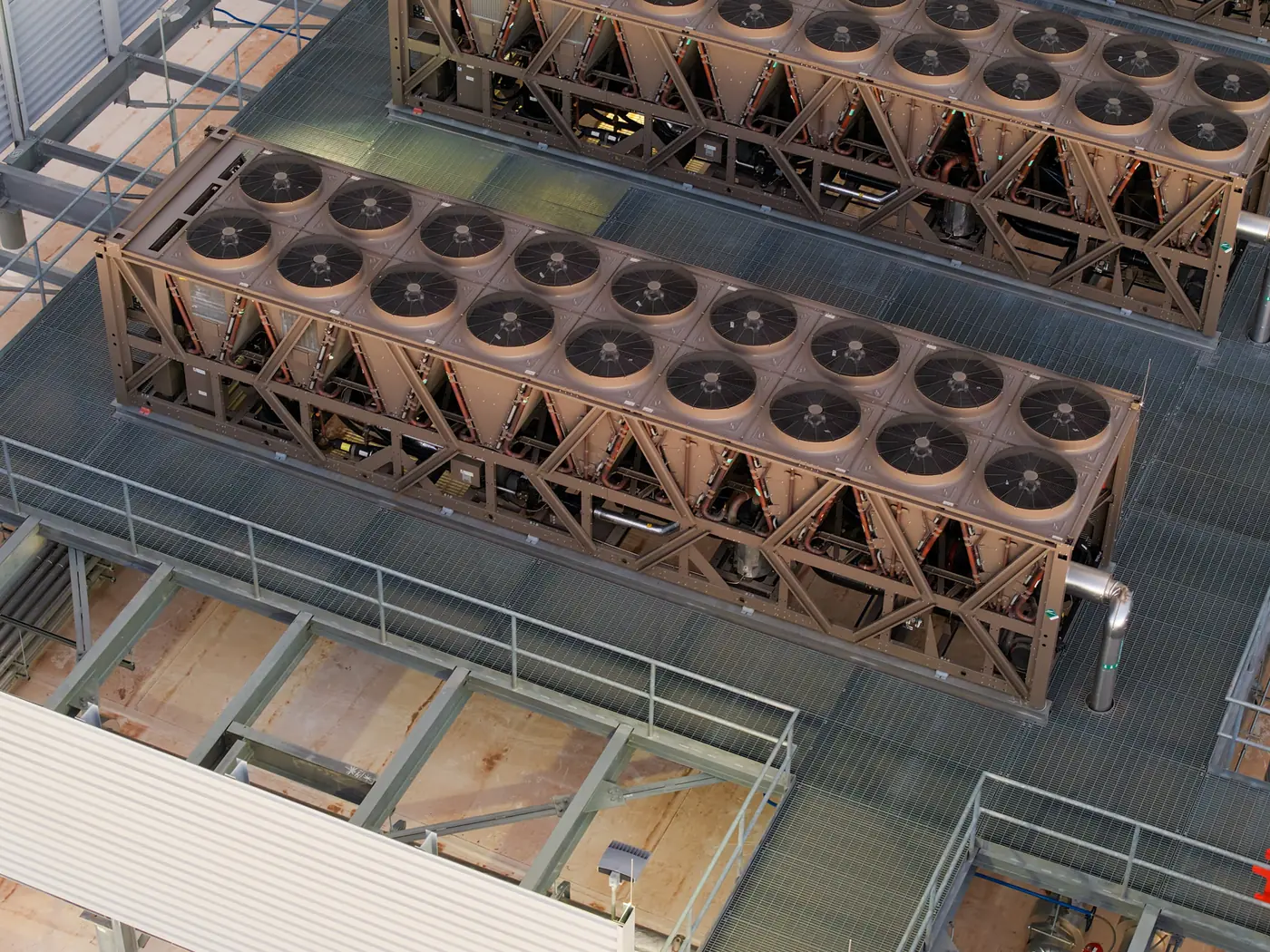
Rooftop cooling equipment at a data centre in Mesa, Arizona, photographed in November 2025.
Credit: Rsparks3 / Wikimedia Commons, CC0.

Microsoft has announced designs intended to eliminate water evaporation for cooling by continually recirculating water between servers and chillers. Its stated plans place pilot projects in 2026, with new sites beginning to operate in late 2027. These are plans for future facilities, rather than evidence that its existing estate has already stopped consuming cooling water. [9]
Microsoft also acknowledges that replacing evaporative cooling with mechanical cooling requires more electricity. More targeted cooling and warmer operating temperatures can limit the increase. This may still be a useful way to save water where supplies are constrained, but the additional power needs have to be assessed with those savings.
Reducing the Overall Demand
The computing task itself offers another way to reduce demand. If a specialised model performs it adequately, using that model instead of a more demanding general-purpose system can lower the electricity needed for the service. [3]
The remaining demand is influenced by location and electricity supply. Research modelling AI servers in the United States found that water and carbon footprints depend strongly on where servers operate, the electricity mix and efficiency improvements. Cleaner power and careful siting can work alongside better cooling, although growth in computing can exceed the savings from more efficient hardware. [10]
Using less water or electricity for each unit of computing does not necessarily reduce overall consumption. If computing expands faster than efficiency improves, the total can still rise.
Clearer reporting would help show whether these changes reduce demand. Facility-level information on electricity, water withdrawals and consumption, sources and seasonal needs would allow communities to assess local pressures. Separating AI from other services and including the water consumed in electricity generation would also reduce uncertainty in global estimates. This information is most useful while decisions about the power connection and water supply can still be changed.
Sources
- The carbon and water footprints of data centers and what this could mean for artificial intelligence
- Energy and AI
- Power Hungry Processing: Watts Driving the Cost of AI Deployment?
- Data centre water consumption
- Water use across the conterminous United States, water years 2010–20
- 2024 United States Data Center Energy Usage Report
- Data Centers in Virginia
- Using life cycle assessment to drive innovation for sustainable cool clouds
- Sustainable by design: Next-generation datacenters consume zero water for cooling
- Environmental impact and net-zero pathways for sustainable artificial intelligence servers in the USA