The Water Trade-Offs of Tree Planting in Drylands
Trees can hold soil in place, shelter farmland from wind and store carbon, making them useful for restoring damaged landscapes. But in drylands, rainfall is limited relative to the atmosphere's demand for water. Growing more…
Trees can hold soil in place, shelter farmland from wind and store carbon, making them useful for restoring damaged landscapes. But in drylands, rainfall is limited relative to the atmosphere's demand for water. Growing more vegetation in places with little water to spare can create competition for the supply that people, crops and existing ecosystems already depend on.[1]
To understand this trade-off, it helps to follow where rainfall goes. Trees can help water enter the soil while also drawing more of it into the atmosphere. Whether planting improves water availability depends on how these effects balance out, along with where the trees grow and how densely they are planted.[2]
Trees and the Dryland Water Cycle
A tree takes up water through its roots and releases water vapour through its leaves, a process called transpiration. Rain caught on leaves and branches can also evaporate before reaching the ground. Together with evaporation from the soil, these movements make up evapotranspiration. Expanding tree cover can therefore increase the share of rainfall returning to the air.[2]
Roots and the organisms living around them can create pathways for water to enter the soil, while shade can reduce evaporation from its surface. Where rainfall would otherwise run off quickly, trees can therefore help more water soak into the ground.[3]
However, water that enters the soil does not necessarily replenish groundwater. Roots may absorb it before it travels deep enough to reach an aquifer, so a project can improve infiltration without increasing groundwater recharge.[2] The water's movement below the surface is just as relevant as whether it initially soaks in.
The Water Cost of More Tree Cover
Researchers can examine these changes across catchments, or areas of land that drain toward a shared outlet. In a global synthesis of 26 catchment datasets, annual runoff fell by an average of 44% when grasslands were planted with trees and 31% when shrublands were planted with trees.[4] Since these conversions largely involved plantations, the figures cannot be used to predict the outcome of every dryland restoration project.
The amount of water available before planting also affected the outcome. Wetter afforested grasslands generally lost a larger amount of runoff, but drier sites lost a larger proportion of their runoff.[4] If a stream already carries little water, even a modest increase in demand can use up a substantial share of what remains.
As trees grow, their demand for water can change. Runoff losses in the synthesis increased with plantation age for at least the first 20 years after planting.[4] Measuring water use while saplings are still small can therefore overlook costs that emerge later.
Lessons From the Loess Plateau
On China's Loess Plateau, efforts to restore vegetation have helped control soil loss while creating concerns about water use. The region has extensive deposits of fine, windblown soil and a long history of severe erosion. More vegetation has increased ground cover, but conflicts over water and soil drying in some areas have complicated the recovery.[5]
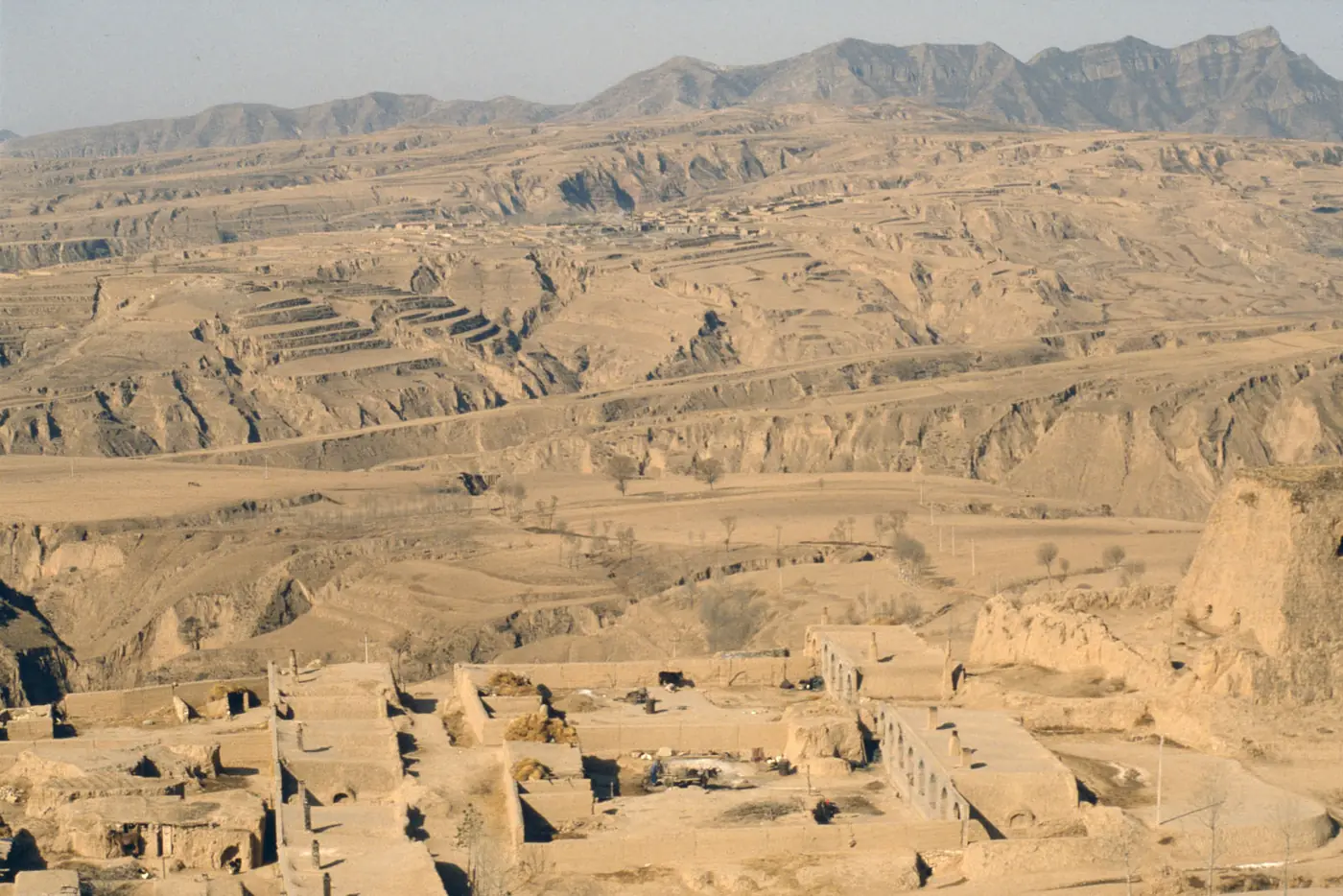 A loess landscape near Hunyuan, China, photographed in 1987. This historical image illustrates the terrain, rather than the outcomes of a particular restoration project.
Credit: Till Niermann / Wikimedia Commons, CC BY-SA 3.0.
A loess landscape near Hunyuan, China, photographed in 1987. This historical image illustrates the terrain, rather than the outcomes of a particular restoration project.
Credit: Till Niermann / Wikimedia Commons, CC BY-SA 3.0.

The large Grain to Green revegetation programme, which began in 1999, provided an opportunity to examine those competing demands. An analysis published in 2016 found that vegetation productivity and evapotranspiration had both increased, while the proportion of annual rainfall leaving catchments as river runoff had declined.[6] The landscape was supporting more plant growth, but less of its rainfall was reaching rivers.
The researchers estimated that vegetation productivity was approaching a level at which plant water use would conflict with human water requirements. However, that estimate depended on assumptions about rainfall and human withdrawals, so it cannot be treated as a fixed limit for another region.[6]
A project can protect soil successfully without establishing that additional planting will leave enough water for the surrounding population. Erosion control and water supply therefore have to be assessed separately.[5]
The Benefits of Scattered Trees
The outcome can look different where trees remain scattered. In an agricultural parkland in Burkina Faso, researchers combined measurements of soil drainage and tree water use with a model of groundwater recharge. Their results indicated that recharge could peak at an intermediate level of tree cover.[3]
At lower levels of tree cover, the improvement in water moving into deeper soil outweighed the extra water the trees used. Once tree cover exceeded that balance point, additional trees consumed more water than their effects on drainage could make up for. The outcome changed with tree density, rather than remaining positive or negative at every level.
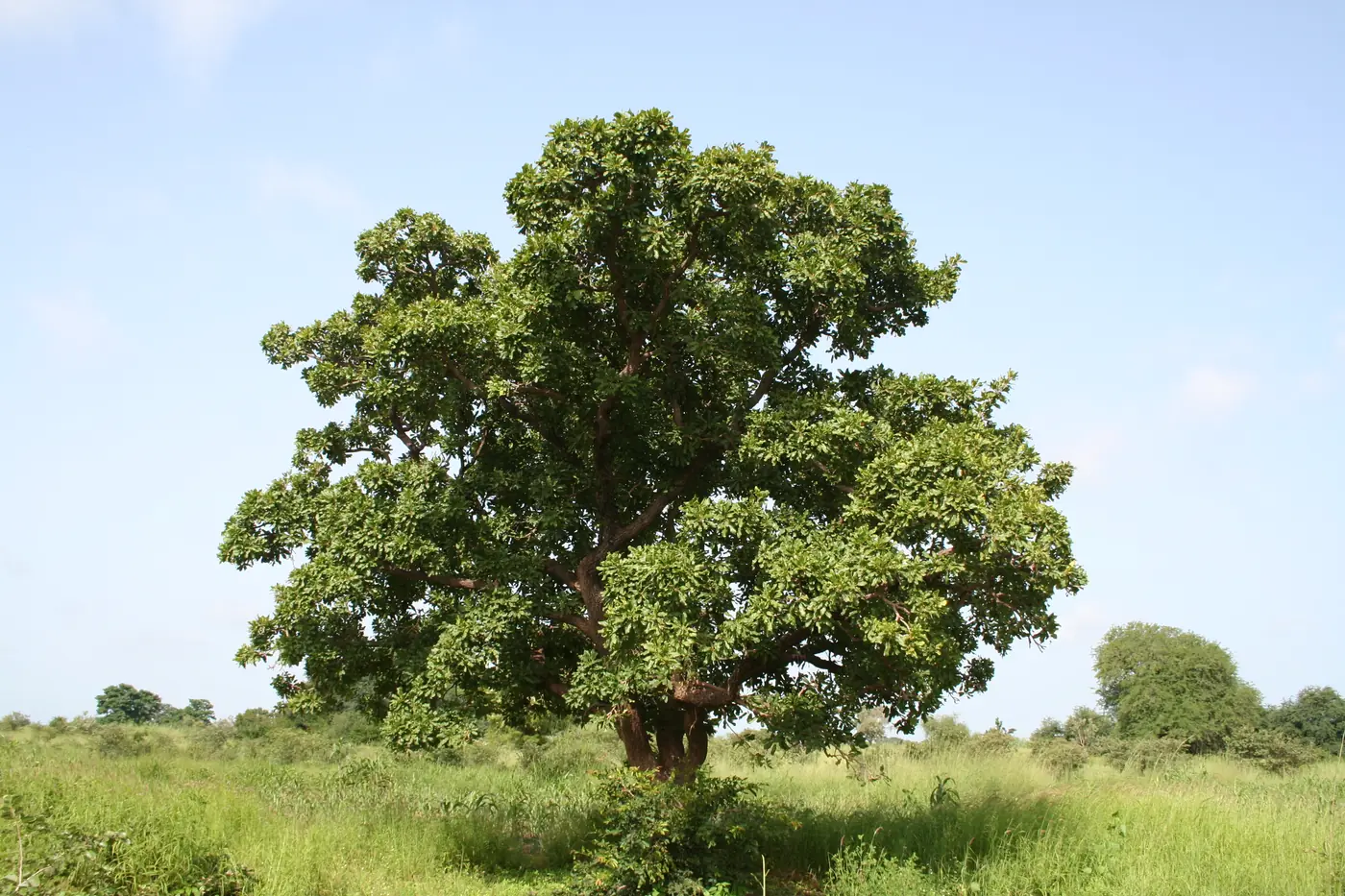 A shea tree in eastern Burkina Faso. The photograph illustrates the species and landscape context, not the study site.
Credit: Marco Schmidt / Wikimedia Commons, CC BY-SA 3.0.
A shea tree in eastern Burkina Faso. The photograph illustrates the species and landscape context, not the study site.
Credit: Marco Schmidt / Wikimedia Commons, CC BY-SA 3.0.

Because this result came from modelling calibrated with field measurements, it is not a planting formula that applies everywhere. Soil, rainfall, tree characteristics and assumptions about where roots obtain water all affect the balance.[3] It does suggest that, under suitable conditions, keeping some trees could support groundwater recharge better than removing every tree or creating dense cover.
Restoration Within a Water Budget
Choosing an appropriate level of tree cover begins with understanding the ecosystem already there. Many grasslands and savannas are naturally open, with species adapted to those conditions. Treating them as incomplete forests can damage biodiversity and alter water flows.[7] In such places, restoration may mean recovering native grasses and managing grazing pressure, alongside protecting the trees that belong in the landscape.[1]
Trees also release water vapour that can contribute to rainfall elsewhere, extending their effects beyond local evaporation. A modelling study of large-scale restoration found that this recycling could offset water losses in some regions, while other regions still lost water.[8] Atmospheric effects therefore belong in planning, although there is no general guarantee that extra local rain will replace the water a dryland plantation uses.
Planning has to account for the water vegetation will use as it matures, along with the needs of people and ecosystems already there. Tree density and species can then be assessed against local conditions. Where forest recovery is appropriate and trees can regrow naturally, protecting that regeneration can reduce the need for planting.[2]
People who depend on the landscape need a role in deciding those goals. FAO’s dryland restoration guidelines call for interventions that reflect stakeholders’ needs and for monitoring that allows management to change as results emerge.[9] Applied to water, this means tracking rainfall alongside soil moisture, relevant groundwater levels, and streamflow, so a dry year is not automatically mistaken for a planting effect.
As observations accumulate, they can guide decisions about expanding a project, changing its planting density or choosing another form of restoration. Success involves vegetation surviving and soil recovering while water remains available to the people and ecosystems sharing the landscape.
Sources
- Desertification
- Pitfalls of Tree Planting Show Why We Need People-Centered Natural Climate Solutions
- Intermediate tree cover can maximize groundwater recharge in the seasonally dry tropics
- Effects of afforestation on water yield: a global synthesis with implications for policy
- Coupling human and natural systems for sustainability: experience from China's Loess Plateau
- Revegetation in China’s Loess Plateau is approaching sustainable water resource limits
- Where Tree Planting and Forest Expansion are Bad for Biodiversity and Ecosystem Services
- Shifts in regional water availability due to global tree restoration
- Global guidelines for the restoration of degraded forests and landscapes in drylands