Roundup, Risk, and the Problem of Trust in Modern Agriculture
The glyphosate debate reveals deeper problems in how scientific risk, regulation, and public trust interact when expert institutions disagree.
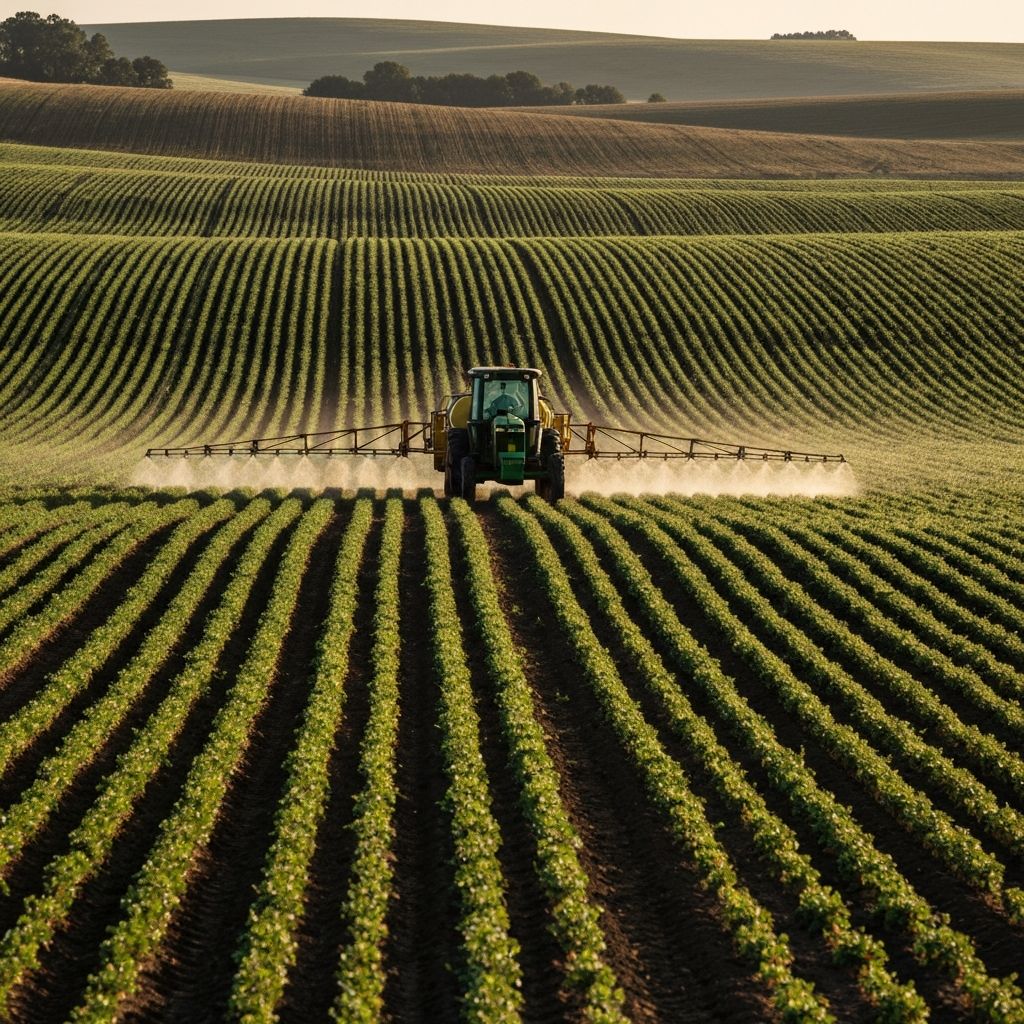
Glyphosate, commonly sold under the brand name Roundup, is one of the most widely used herbicides in the world. It is a core part of modern agriculture, from large scale row crops to home gardening. For decades, it was treated as a relatively low risk, routine chemical. But the growing controversy around Roundup shows that this issue is about more than a single herbicide. It reveals deeper problems in how scientific risk, regulation, and public trust interact.
From a scientific standpoint, the glyphosate debate is not simple. In 2015, the International Agency for Research on Cancer classified glyphosate as "probably carcinogenic to humans," based on evidence of DNA damage, animal studies, and limited epidemiological links to non Hodgkin lymphoma. In contrast, regulatory agencies such as the U.S. Environmental Protection Agency and the European Food Safety Authority concluded that glyphosate is unlikely to pose a cancer risk at typical exposure levels. These agencies emphasize real world dose and exposure, while IARC focuses on whether a substance can cause cancer under any conditions.
This difference may sound technical, but to the public it feels contradictory. When expert institutions disagree, safety stops feeling like a clear scientific conclusion and starts to feel like a judgment shaped by assumptions, models, and interpretation. That uncertainty alone is enough to raise concern, especially for a chemical used so broadly in food production.
Legal cases against Bayer, which now owns Monsanto, added another layer to this debate. Internal company communications revealed efforts to influence regulatory narratives and ghostwrite scientific papers. Even if glyphosate's cancer risk is ultimately found to be low, these revelations weaken confidence in the independence of the science used to justify its safety. Trust matters in risk assessment. When people believe companies may shape the evidence, official reassurances carry less weight.
There is also a systems level issue. Roundup is not just one product. It is embedded in genetically modified "Roundup Ready" crops and weed management strategies worldwide. That means the question is not simply whether glyphosate is safe, but how resilient and adaptable our agricultural system really is. Heavy dependence on a single chemical increases vulnerability, whether the risk is health related, ecological, or economic.
The Roundup debate reflects a larger pattern in environmental health. Technologies are adopted quickly for efficiency and cost. Years later, potential risks emerge, and by then the system is deeply dependent. Even when evidence is mixed, precaution becomes harder to implement.
Whether glyphosate proves to be a significant carcinogenic risk or a relatively low one, the controversy highlights a critical point. Scientific uncertainty, regulatory credibility, and corporate influence are tightly linked. The real issue may not be just Roundup itself, but whether the public can trust that health and environmental protections are truly independent of the industries they regulate.