Palm Oil: The Invisible Ingredient Driving Deforestation
Palm oil is in nearly everything we use, but its production has destroyed vast rainforests and pushed species like orangutans toward extinction.
Palm oil didn't take over the world because people love it. Most people don't even know when they're using it. It took over because it's cheap, flexible, and works in almost everything. Food companies use it because it stays solid at room temperature and makes snacks shelf stable. Personal care brands use it because it foams well and blends easily into soaps, shampoos, and makeup. Biofuel companies use it because it's one of the cheapest plant oils available. Once industries built their systems around it, palm oil became the default.
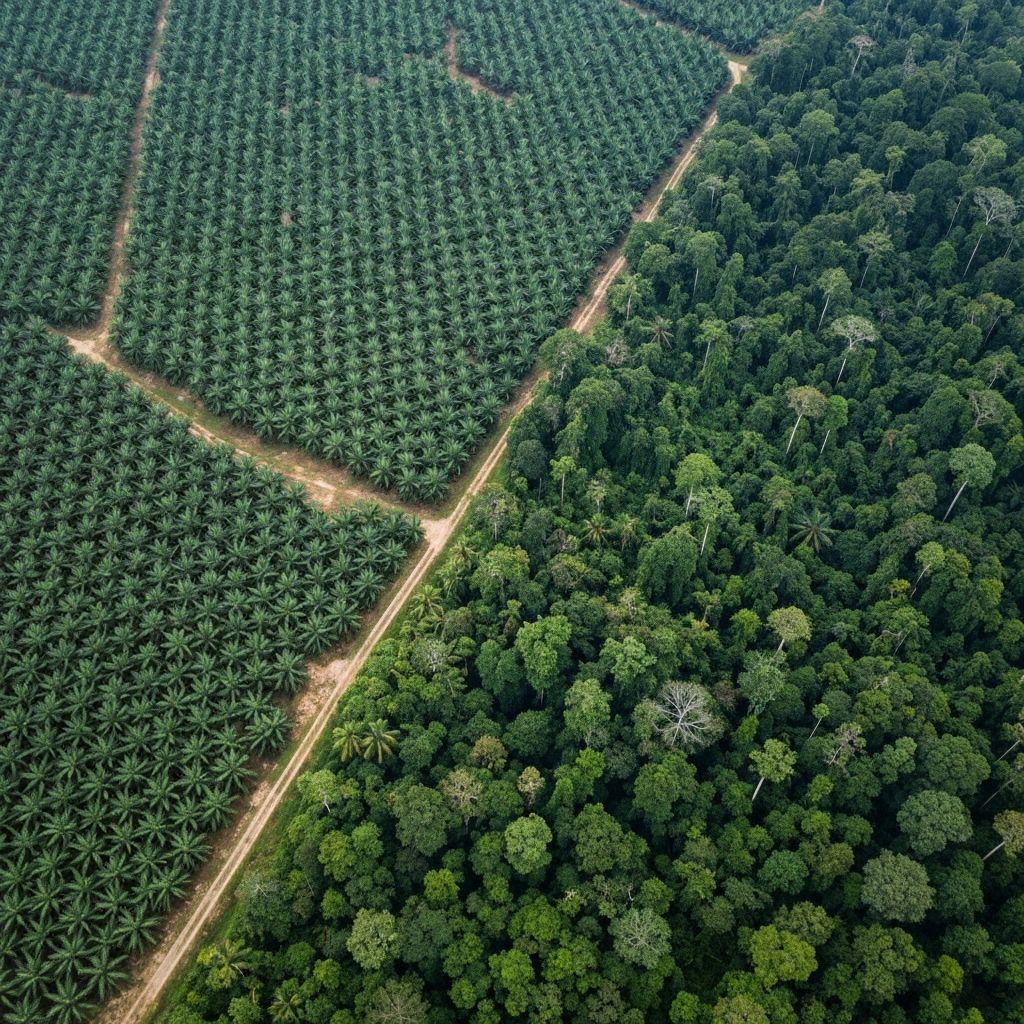
The problem is where it comes from and what has to be destroyed to grow it. Huge areas of rainforest in Indonesia and Malaysia have been cleared to make room for palm plantations. These forests are some of the most biodiverse places on Earth. They are also massive carbon sinks. When they are cut or burned, carbon is released into the atmosphere and species lose their habitat at the same time. Orangutans, tigers, and countless smaller species are pushed closer to extinction, not because people want to harm them, but because the land they depend on is turned into monoculture farms.
Palm oil is often defended as "efficient" because oil palms produce more oil per acre than soy, sunflower, or rapeseed. That sounds good on paper, but it ignores what kind of land is being converted. Replacing a rainforest with a plantation is not neutral just because the crop has high yield. It turns a complex ecosystem into a simplified system that supports far fewer species and stores far less carbon long term.
What makes this harder is how hidden palm oil is. It shows up under dozens of ingredient names, so people don't realize how often they're buying it. Even when companies promise "sustainable" palm oil, tracing where it actually came from is complicated, and deforestation can still slip through supply chains.
This is why palm oil is a biodiversity issue, not just a consumer choice issue. When forests are treated as raw material instead of living systems, the cost shows up as species loss, carbon emissions, and ecosystems that can't recover. Protecting biodiversity means paying attention to what's driving land use in the first place, not just what's on the label.