Lithium Extraction and the Environmental Trade-Offs of Battery Production
Lithium has to be extracted and processed before it can be used in a battery. Producing a material pure enough for manufacturing connects electric vehicles and energy storage with mines, chemical plants, and the surrounding…
Lithium has to be extracted and processed before it can be used in a battery. Producing a material pure enough for manufacturing connects electric vehicles and energy storage with mines, chemical plants, and the surrounding landscapes, including places where water is already scarce.
These production impacts remain relevant even when using the finished battery reduces emissions. The International Energy Agency estimates that a medium-sized electric car produces about half the lifetime greenhouse gas emissions of an equivalent combustion-engine car globally, including production.[1] That climate benefit does not, by itself, explain what happens to a wetland near a lithium operation. Assessing battery production involves considering both the emissions avoided during use and the local pressures created by extraction.
Lithium Extraction for Battery Production
Batteries account for an estimated 87% of global lithium use, according to the U.S. Geological Survey.[2] Growth in electric vehicles and battery storage increases demand for lithium from two established sources: underground brines in which it is dissolved, and hard-rock minerals that contain it.
In parts of Chile and Argentina, lithium is extracted by pumping brine, or water with high concentrations of dissolved salts, into shallow ponds. Sun and wind evaporate water, leaving a more concentrated lithium solution. Chemical processing then removes unwanted substances and produces compounds suitable for battery materials. Hard-rock mining, which is prominent in Australia, begins with extracting and concentrating minerals such as spodumene before heat treatment and chemical processing.[3]
Evaporation depends on a dry climate and extensive ponds; processing rock depends more heavily on machinery and industrial heat. These different demands help explain why lithium’s environmental footprint varies between operations.
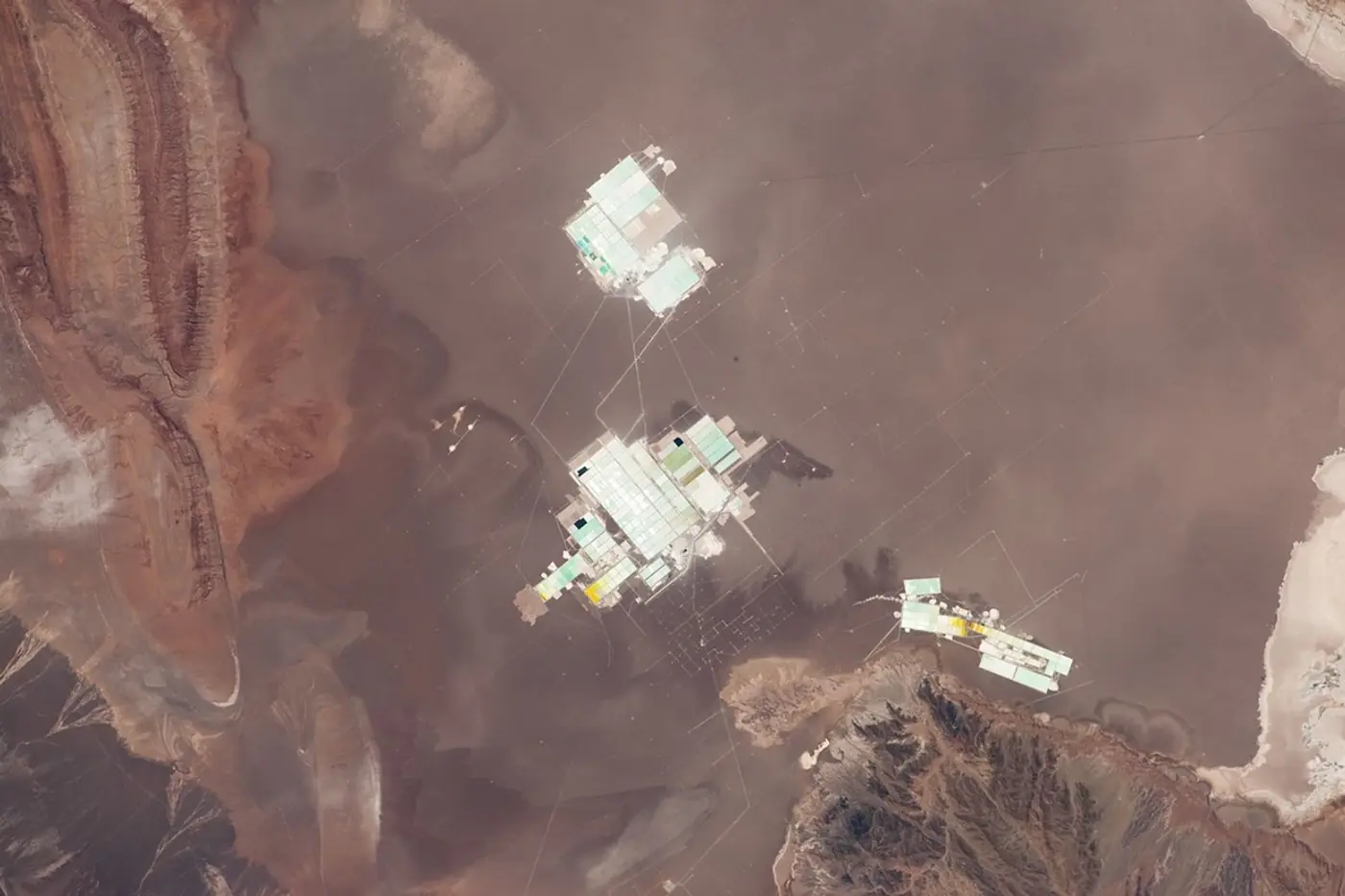 An archive astronaut photograph shows lithium-brine evaporation ponds in the Salar de Atacama.
Credit: NASA / ISS Expedition 22 crew, via NASA Earth Observatory.
An archive astronaut photograph shows lithium-brine evaporation ponds in the Salar de Atacama.
Credit: NASA / ISS Expedition 22 crew, via NASA Earth Observatory.
Water Pressure in Dry Landscapes
The dry climate that allows water to evaporate effectively also makes its use a concern. Lithium operations remove water in brine and use freshwater for industrial processes, but these are not interchangeable supplies. Concentrated brine cannot be used for the same purposes as freshwater, although removing it still has environmental consequences that need assessment. Combining both into one water-use figure can hide these differences.[4]
Pumping can lower groundwater levels and change flows between connected parts of a basin. Whether those changes reach springs, lagoons, or other groundwater stores depends on the geology. Removing a litre from one location may therefore have a different effect from removing a litre elsewhere in the same system.[5]
Research in Chile’s Salar de Atacama illustrates why this matters. A hydrological assessment found that nearly all water flowing into the basin had entered the ground more than 65 years earlier. Recent precipitation nevertheless remained important for sustaining wetlands, and drought followed by wetter conditions strongly influenced changes in surface water.[5] These findings complicate attempts to attribute every shrinking lagoon to mining, while challenging the assumption that groundwater withdrawals are quickly replenished by rain.
An assessment needs to establish where the water comes from, how quickly it is replaced, and which ecosystems or users depend on it. Those questions vary by location and cannot be answered using a single ‘litres per battery’ figure.
Wetlands and the Communities Around Them
In the high Andean salt-flat region, flamingos depend on a network of wetlands. Their food and habitat change with water levels and biological productivity, which are influenced by climate. Since the birds move between wetlands, changes at one site can matter beyond that location.
An analysis combining three decades of flamingo observations with environmental data found that lithium mining in the Salar de Atacama was negatively associated with the abundance of Andean and James’s flamingos. Across the wider study region, however, the researchers found no overall population trend. They also identified industrial disturbance, including traffic and noise, as a possible contributor to the local relationship.[6] The evidence therefore raises a conservation concern without establishing that brine pumping alone caused a regional decline.
Nearby Indigenous communities use the landscape for livelihoods and cultural practices, with relationships to water that extend beyond its industrial use. Ethnographic research in the Atacama describes how lithium development interacts with these relationships and with disagreements over environmental knowledge and participation.[7] Involving communities in monitoring and decisions allows the people experiencing a project’s benefits and burdens locally to take part, even when the batteries are used far away.
The Footprint of Hard-Rock Mining
Hard-rock mining affects the land through excavation and the storage of waste rock and fine residues from processing. Disturbed ground, waste facilities, and chemical processing can also threaten water quality, depending on the site’s geology and how these materials are managed.[4]
Refining adds an energy burden. Spodumene processing requires high-temperature treatment to make lithium accessible for subsequent extraction. In a life-cycle comparison of Chilean brines and Australian ore supply chains, lithium compounds produced through the brine route had lower greenhouse gas emissions than their ore-derived equivalents. Fossil energy used in processing helped explain the difference.[3] This was a comparison of particular production pathways; it does not establish that every brine project has a smaller overall environmental impact.
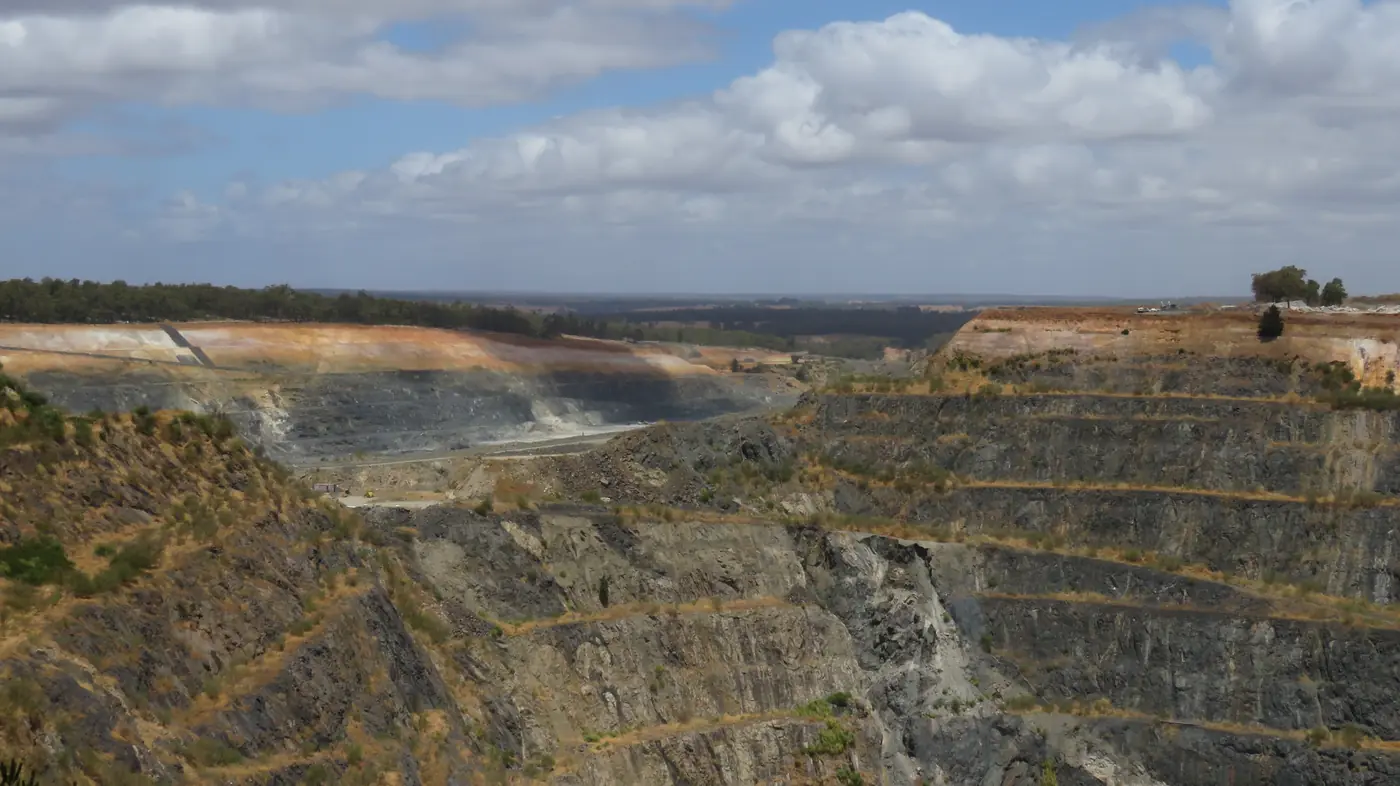 An open pit at Greenbushes in Western Australia shows the land disturbance associated with mineral extraction.
Credit: Calistemon / Wikimedia Commons, CC BY-SA 4.0.
An open pit at Greenbushes in Western Australia shows the land disturbance associated with mineral extraction.
Credit: Calistemon / Wikimedia Commons, CC BY-SA 4.0.

Other battery materials and the energy used to manufacture cells also contribute to production emissions.[1] The materials required depend on the chemistry: lithium iron phosphate batteries avoid the nickel and cobalt found in nickel manganese cobalt batteries, but still use lithium. Changing the chemistry can reduce demand for some minerals without removing the impacts of extraction and manufacturing altogether.[8]
The Climate Balance Over a Battery’s Life
Production is one stage in the environmental comparison between vehicles. A gasoline car continues using fuel that must be extracted, refined, and burned, while an electric car’s operating emissions depend largely on its charging electricity. Life-cycle assessment considers these stages together, including vehicle and battery production, energy supply, maintenance, and treatment at the end of use.
A recent International Council on Clean Transportation analysis estimated that medium-sized battery electric cars sold in the European Union produce 73% less lifetime greenhouse gas emissions than comparable gasoline cars. That result includes battery production and assumes that the region’s electricity supply becomes cleaner over the vehicles’ lives. Although electric-car production emissions were about 40% higher, lower emissions during use offset the difference after roughly 17,000 kilometres in the study’s central case.[9]
The result varies with vehicle size, energy use, electricity supply, and lifetime mileage, so it cannot be applied unchanged to every car. It also concerns greenhouse gas emissions. A lower carbon footprint does not establish whether a mine protects groundwater or accounts for the priorities of nearby communities.
The Promise and Limits of Direct Extraction
Direct lithium extraction, or DLE, aims to remove lithium from brine without relying as heavily on large evaporation ponds. Some approaches use materials that selectively capture lithium, while others use membranes to separate ions or different chemical and electrochemical processes. The remaining brine may be returned underground, depending on the design.
Reducing evaporation and the area occupied by ponds could ease some pressures. However, separating lithium is only one stage of producing a usable battery material. A review in Nature Reviews Earth & Environment found that some DLE approaches require substantial freshwater, chemicals, or heating. Dilute lithium solutions may still need further concentration, and spent brine requires careful management.[10]
Assessing these methods requires following the full process from pumping brine to producing a purified lithium compound. Performance with real brine, energy sources, and any effects of reinjection all influence the outcome. Faster recovery and smaller facilities can offer benefits, but they need to be considered alongside the water, chemical, and energy demands of the operation.
Reducing the Need for New Extraction
Recycling offers another way to reduce pressure by recovering materials already brought into use. An industrial-scale study found that producing battery-grade cathode materials from used lithium-ion batteries reduced greenhouse gas emissions, water consumption, and energy consumption by at least 58% compared with the mining supply chains assessed.[11] The analysis used operating data from a recycling facility, making it a useful demonstration of potential savings, although the results remain specific to the processes and materials studied.
Recycling also uses energy and processing, and its present contribution is limited by how many batteries are available to recover. Many materials remain in vehicles for years as the battery fleet grows. The IEA identifies manufacturing scrap as a significant near-term source, with retired vehicle batteries becoming much more important later.[1] Collection and recycling can lower future mining demand, but cannot immediately provide all the material needed by an expanding market.
Material demand can be reduced before a battery reaches recycling. Smaller battery packs use fewer materials where they meet transport needs, while cleaner energy for mineral processing and cell manufacturing can lower production emissions.[1] These changes can accompany improvements at extraction sites while batteries are still in use.
Research on water use also supports assessing mines within the connected resources and competing demands of their basins.[4][5] Public monitoring and meaningful community participation can make the findings more useful to affected people.[7] Improving the supply of lithium means accounting for water, habitats, and livelihoods in decisions about production, alongside the climate benefits batteries can provide.
Sources
- EV Battery Supply Chain Sustainability
- Mineral commodity summaries 2025
- Energy, greenhouse gas, and water life cycle analysis of lithium carbonate and lithium hydroxide monohydrate from brine and ore resources and their use in lithium ion battery cathodes and lithium ion batteries
- Lithium and water: Hydrosocial impacts across the life cycle of energy storage
- Relic Groundwater and Prolonged Drought Confound Interpretations of Water Sustainability and Lithium Extraction in Arid Lands
- Climate change and lithium mining influence flamingo abundance in the Lithium Triangle
- The ‘Alterlives’ of Green Extractivism: Lithium Mining and Exhausted Ecologies in the Atacama Desert
- Electric vehicle batteries
- Life-cycle greenhouse gas emissions from passenger cars in the European Union: A 2025 update and key factors to consider
- Environmental impact of direct lithium extraction from brines
- Life cycle comparison of industrial-scale lithium-ion battery recycling and mining supply chains