Landfill Methane: The Climate Cost of Buried Waste
Food waste can continue contributing to climate change after it has been buried. As oxygen is used up inside a landfill, the microbial processes breaking down the food change, eventually producing methane. This powerful greenhouse…
Food waste can continue contributing to climate change after it has been buried. As oxygen is used up inside a landfill, the microbial processes breaking down the food change, eventually producing methane. This powerful greenhouse gas can escape into the atmosphere long after the waste has been covered with soil.[1]
Reducing landfill methane involves both the waste already underground and the material still being thrown away. Evidence available through July 2025 explains why collection equipment is useful, but also why preventing further organic waste from being buried addresses a part of the problem that collection alone cannot resolve.
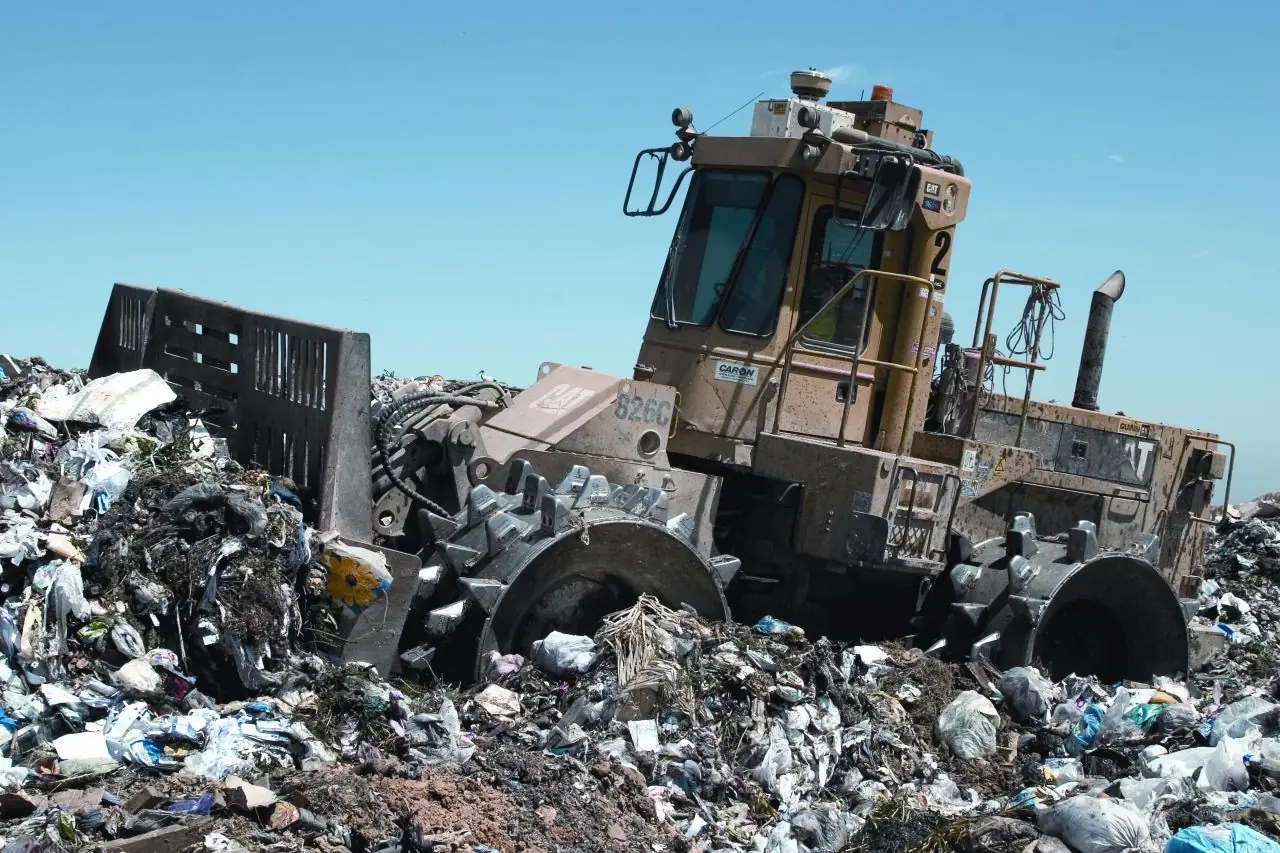 A compactor working at an Australian landfill; an illustration of waste placement and compaction.
Credit: Ropable / Wikimedia Commons / Public domain.
A compactor working at an Australian landfill; an illustration of waste placement and compaction.
Credit: Ropable / Wikimedia Commons / Public domain.

How Landfill Methane Forms
When biodegradable waste first arrives, microbes consume the oxygen available around it. As that oxygen runs out, a different sequence of microbial processes takes over, eventually producing methane and carbon dioxide. Landfill gas commonly contains roughly equal proportions of those two gases.[1]
Moisture, temperature and the type of waste influence how quickly decomposition occurs. Moist conditions help it proceed, while dry conditions can slow it considerably, so the same amount of rubbish may produce methane at different rates in different surroundings. Waste is also added over time, leaving material at different stages of decay within the same landfill.[2]
Not all the methane produced underground reaches the atmosphere. Some is collected, and microbes in the landfill cover convert some into carbon dioxide, while the rest can escape.[3] Understanding the climate impact requires distinguishing how much gas is generated from how much is actually emitted.
A Strong Warming Effect
Once methane escapes, it affects how much heat the atmosphere retains. The IPCC estimates that a pulse of methane from non-fossil sources has roughly 80 times the global warming potential of the same mass of carbon dioxide over 20 years, and about 27 times over 100 years. These comparisons add up the gases' warming effects over the stated period.[4]
The comparison changes with time because an increase in atmospheric methane decays over roughly a decade, whereas some carbon dioxide remains for centuries or longer. Methane has a particularly strong warming effect soon after it is released, so cutting its emissions can slow warming relatively quickly. Sustained reductions in carbon dioxide are still needed to limit climate change over the longer term.[4]
The Global Methane Assessment from the UN Environment Programme and Climate and Clean Air Coalition attributes about one-fifth of human-caused methane emissions to waste. This includes both landfills and wastewater, so the full share cannot be assigned to buried solid waste alone.[5] Both sources contribute to the opportunity for reducing emissions through waste management.
Food Waste and the Capture Gap
Within the waste that does reach landfills, food has an outsized effect. An EPA analysis published in 2023 estimated that food waste caused about 58% of the methane escaping from U.S. municipal solid waste landfills in 2020. This was a national modeling estimate, with uncertainty, rather than a direct measurement of every landfill.[3]
Food decomposes relatively quickly, which means it can release methane before collection systems reach newly filled areas or are installed at all. In its analysis, EPA estimated that 61% of the methane generated by landfilled food waste escaped into the atmosphere.[3]
Later equipment cannot collect gas that has already escaped. Improving collection can reduce continuing releases, while keeping food out of landfills avoids the early emissions that an upgrade may miss.
What Measurements Reveal
The area where waste is placed and compacted, called the work face, moves as a landfill fills. Traffic and safety restrictions can make it difficult to survey this area on foot. Ground-level monitoring may therefore miss emissions from an active part of the site.[6]
Airborne observations help reveal what happens there. A study published in 2024 surveyed 217 U.S. landfills and detected large methane emissions at 115. Of those, 52 showed emissions from the work face. Together, the sites with work-face emissions accounted for 79% of the emissions quantified in the study.[6] That percentage describes the total emissions from those sites, rather than proving that 79% of all U.S. landfill methane comes from work faces.
Satellite observations have extended the search internationally. In an analysis released in June 2025, Carbon Mapper reported detecting large methane emissions at 371 landfills and dumpsites across 71 countries, following observations of more than 10,000 waste sites. The findings identify specific places where reducing large releases could make a substantial difference.[7]
A satellite’s ability to detect methane depends on cloud cover, how often it observes a site and how large a release it can measure. A landfill with no detected plume may still emit gas at another time or below the instrument’s sensitivity.[7] Repeated observations help establish whether a release persists rather than treating one image as a complete record.
The Benefits and Limits of Gas Capture
Gas collection systems use wells or horizontal collectors connected to pipes, which draw the gas toward treatment equipment. Once collected, it can be burned in a flare or used in an energy project.[1] This allows some of the methane to be managed before it reaches the atmosphere.
Combustion converts methane mainly into carbon dioxide and water, reducing the warming impact of the gas that is successfully captured and burned.[1] Energy recovery can add another benefit by using that gas to generate electricity or supply heat. With further treatment to remove carbon dioxide and other unwanted components, landfill gas can also become a fuel suitable for replacing fossil natural gas.[8]
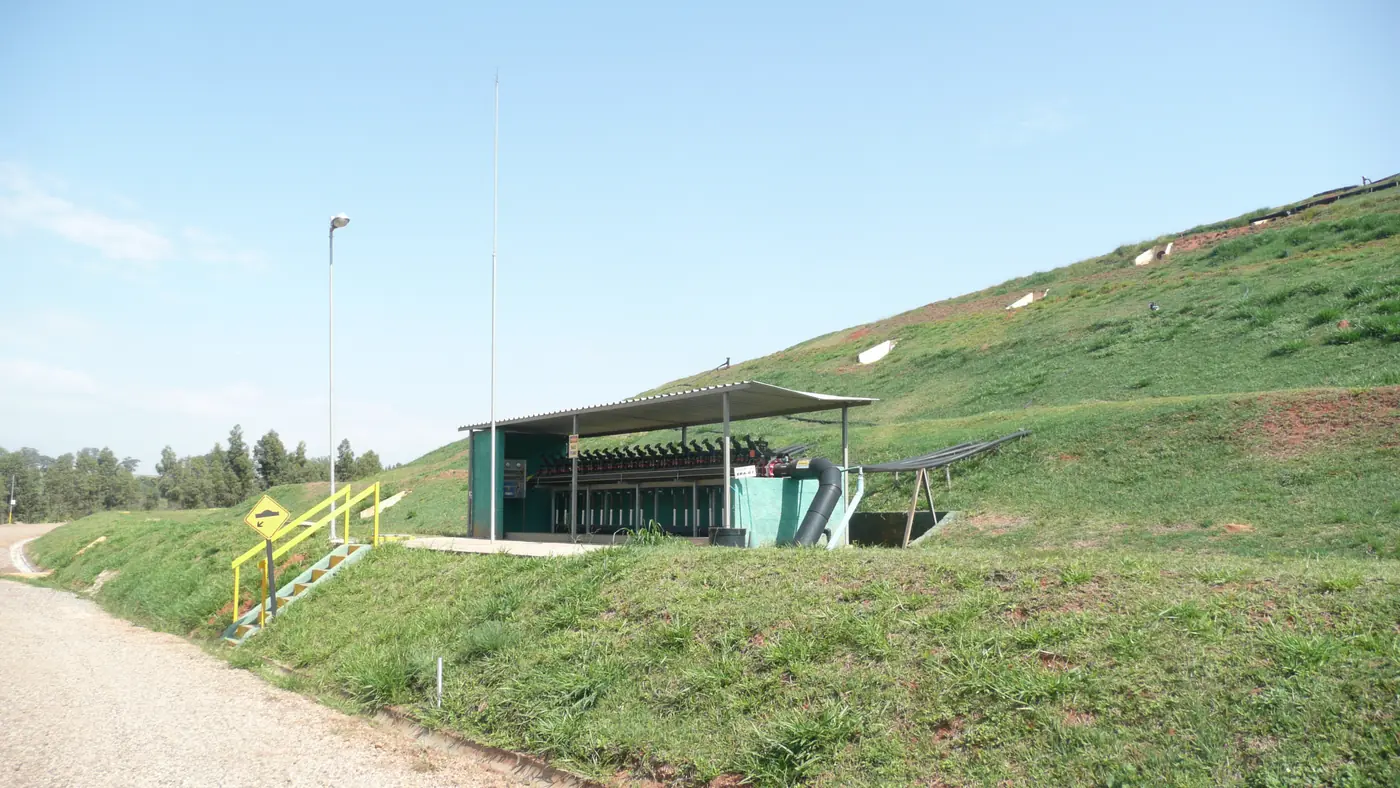 Landfill gas recovery equipment in Paulínia, Brazil, photographed in 2009.
Credit: Carbone+ / Wikimedia Commons / CC BY-SA 4.0.
Landfill gas recovery equipment in Paulínia, Brazil, photographed in 2009.
Credit: Carbone+ / Wikimedia Commons / CC BY-SA 4.0.

The benefit depends on how much methane actually reaches the equipment. Collection efficiency is the share of generated gas that a system captures, and it varies with the area covered and whether the collectors are working properly. Even an effective flare cannot destroy gas that escapes somewhere else.[2] An energy project needs to be assessed using emissions across the landfill as well as the gas it supplies.
Collection systems also need continuing maintenance. An EPA enforcement alert in 2024 documented recurring failures in monitoring and maintenance at municipal landfills, including problems with gas collection.[9] When monitoring detects a release, operators need to check the affected area, repair equipment or cover where necessary, and measure again to see whether emissions have fallen.
Keeping Organic Waste Out of Landfills
Food has environmental costs before it becomes waste because it must be grown, processed, refrigerated and transported. Avoiding unnecessary production and getting usable surplus food to people can reduce these costs as well as the methane from disposal. EPA’s assessment places prevention, donation and using surplus ingredients in new food products among the most environmentally preferable options because they can replace the need for additional food production.[10]
Composting provides oxygen so unavoidable organic scraps can decompose into a soil amendment with less methane formation. This requires managing both air and moisture, since poorly aerated areas can still produce methane.[10] Its environmental performance depends on how the material is handled throughout the process.[11]
Anaerobic digestion takes another approach. It breaks down organic waste without oxygen in a controlled system, deliberately producing biogas for collection and use. The remaining material, called digestate, can provide nutrients and organic matter for soils when appropriately managed.[11] Preventing leaks and managing the residue are part of delivering the intended environmental benefit.[10]
These options need systems that connect collection with a suitable destination. Separated scraps need a treatment facility, while edible surplus needs a way to reach people who can use it. Households and businesses can also reduce what those systems have to handle by buying and preparing quantities that will be used.
Less organic waste entering a landfill does not stop the material already buried from decomposing. Monitoring and gas control need to continue alongside changes in disposal, so that communities address both existing emissions and the waste that could produce methane in the future.
Sources
- LFG Energy Project Development Handbook, Chapter 1: Landfill Gas Energy Basics
- LFG Energy Project Development Handbook, Chapter 2: Landfill Gas Modeling
- Quantifying Methane Emissions from Landfilled Food Waste
- The Earth's Energy Budget, Climate Feedbacks, and Climate Sensitivity
- Global Methane Assessment: Benefits and Costs of Mitigating Methane Emissions
- Investigating Major Sources of Methane Emissions at US Landfills
- Methane Waste Super-emitters: An Opportunity for Global Action in the Waste Sector
- LFG Energy Project Development Handbook, Chapter 3: Project Technology Options
- Enforcement Alert: EPA Finds MSW Landfills are Violating Monitoring and Maintenance Requirements
- From Field to Bin: The Environmental Impacts of U.S. Food Waste Management Pathways
- Downstream Management of Organic Waste in the United States: Strategies for Methane Mitigation