Forever Chemicals: The Growing Cost of Cleaning Up PFAS
PFAS pollution can remain long after the products containing these chemicals have been used and discarded. In January 2025, the Forever Lobbying Project, a collaboration between journalists and scientific experts, investigated what…
PFAS pollution can remain long after the products containing these chemicals have been used and discarded. In January 2025, the Forever Lobbying Project, a collaboration between journalists and scientific experts, investigated what dealing with that pollution could cost in Europe. Under a scenario without effective restrictions, it estimated a bill of around €2 trillion over 20 years for existing contamination and continuing releases.[1]
Part of the difficulty is that removing these ‘forever chemicals’ from water does not necessarily destroy them. The chemicals may still be present in the used filters or contaminated waste, which communities then have to manage while protecting their water supplies from further pollution. The cost of cleanup therefore continues beyond the initial treatment.
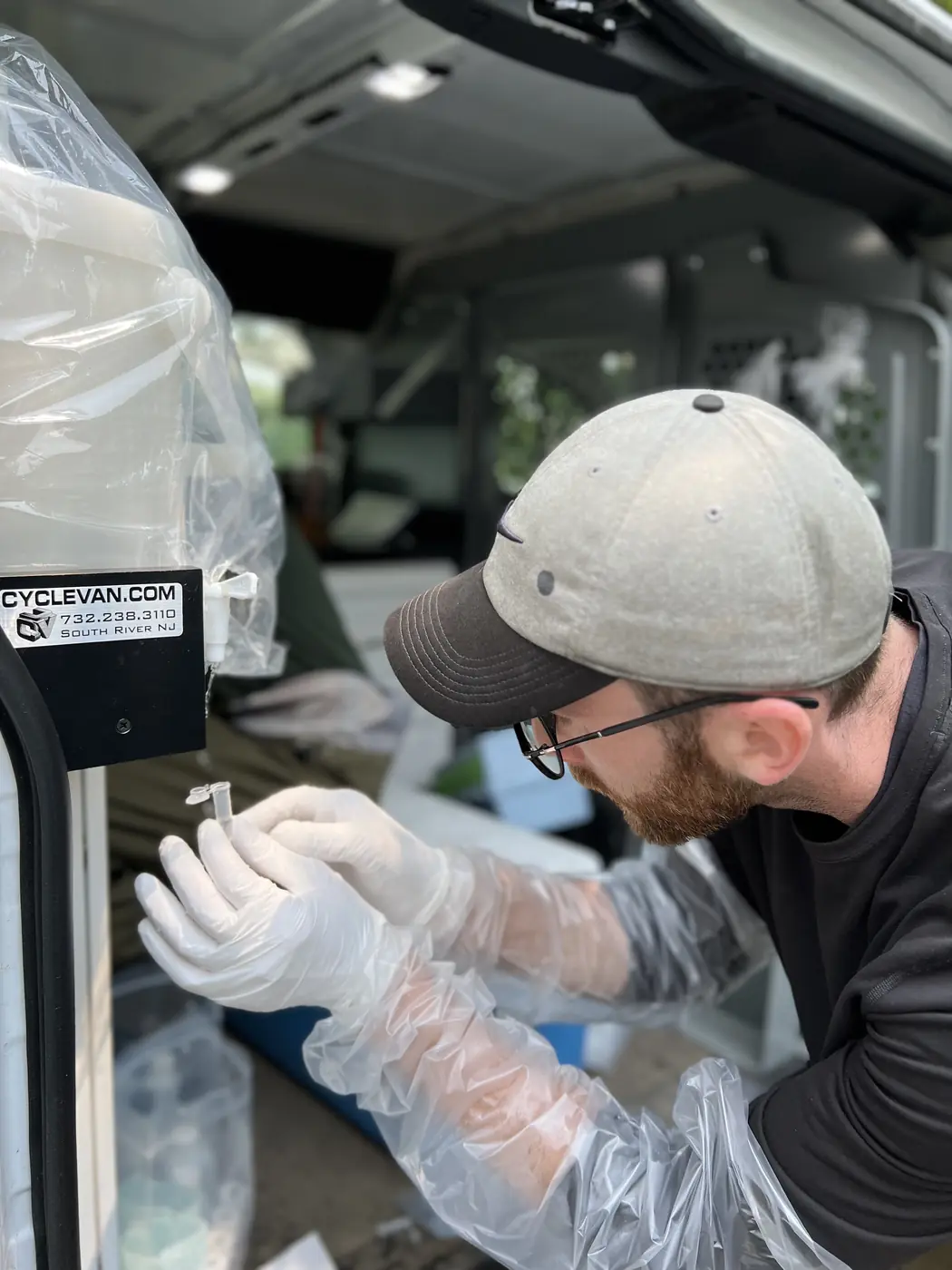 A researcher handles a sample during PFAS fieldwork at the Delaware River in Trenton, New Jersey, in a photograph published in 2023.
Credit: Jacob Gray / U.S. Geological Survey, public domain.
A researcher handles a sample during PFAS fieldwork at the Delaware River in Trenton, New Jersey, in a photograph published in 2023.
Credit: Jacob Gray / U.S. Geological Survey, public domain.
What Makes PFAS So Persistent?
Per- and polyfluoroalkyl substances, or PFAS, are a large family of manufactured chemicals found in products such as nonstick cookware, stain-resistant textiles, and certain firefighting foams. Strong bonds between carbon and fluorine help these chemicals resist breakdown, making them useful in products that need to withstand demanding conditions. However, the same bonds make it difficult for natural processes to break them down once they enter the environment.[2]
Once released, PFAS can contaminate soil and water, creating exposure through drinking water and food. Some can accumulate in the body with repeated exposure. Studies have linked exposure to certain PFAS with increased risks of some cancers and effects on the immune system, although the evidence and risks differ across this large chemical family.[2]
Since PFAS do not all behave in the same way or pose the same risk, cleanup needs to account for which compounds are present and how people are exposed to them. Their persistence makes contamination a long-term concern, but treating the whole family as identical can obscure what a particular community needs to address.
A Cleanup Bill With Two Scenarios
The European investigation explored different versions of the work ahead. Its narrower “legacy” scenario focused on older, long-chain PFAS such as PFOA and PFOS and assumed emissions stopped. Even this limited approach produced an estimated cost of roughly €4.8 billion a year.[1]
The scope included selected contaminated soils, liquid draining from landfills, and treatment at an assumed 5% of large drinking-water supply zones. The broader scenario added continuing pollution and more difficult short- and ultrashort-chain PFAS. It assumed treatment across all large drinking-water supply zones, including removal of trifluoroacetic acid, or TFA, alongside work on wastewater, sludge, and landfill drainage.[3]
The two estimates cover different amounts and types of work, so the difference between them is not simply the cost of delaying the same cleanup project. The broader scenario would require extensive treatment and destruction capacity, including technologies that had not yet been proven to work for TFA in some waste streams. Some costs, such as restoring contaminated groundwater, were also excluded from the methodology.[3]
The estimates are useful for understanding how large the expense could be under those assumptions. They should not be read as an audited total covering every contaminated site.
The Expenses After Filtration
At a treatment plant, granular activated carbon captures PFAS on its surface as water flows through it, while ion-exchange resins use chemical charges to capture certain dissolved PFAS. Both can continue doing this only until their useful capacity is used up, after which the materials need to be replaced.[4]
Reverse osmosis works differently, using pressure to force water through a membrane. This separates cleaner water from a smaller stream in which contaminants become concentrated. Although these technologies can reduce PFAS in drinking water, they also produce contaminated material or liquid that the operator still has to manage and pay for.[4]
Disposal introduces further choices. A landfill may contain waste, but it does not destroy PFAS; contaminated drainage can require additional management. Thermal treatment can break down PFAS under suitable conditions, yet EPA's 2024 guidance identified uncertainties about destruction performance and the substances produced when combustion is incomplete. Temperature, operating conditions, and testing all matter.[5]
For a water utility, choosing a filter therefore also means deciding what to do with the chemicals it collects. The purchase price does not cover the full process, and a system that cleans water effectively may still allow PFAS to return to the environment if its waste is not properly managed.
Contamination Beyond the Tap
Sewage treatment faces a similar problem. On January 14, 2025, EPA released a draft assessment of PFOA and PFOS in sewage sludge, examining how managing waste in one place could create exposure in another.[6]
Wastewater treatment produces solids that can be treated and used as fertilizer or soil conditioner, commonly called biosolids. Conventional treatment does not destroy PFOA and PFOS, and these chemicals can accumulate in the sludge. When contaminated biosolids reach farmland, the substances can move into groundwater or nearby waters and enter plants, fish, and livestock.[6]
In some modeled land-application scenarios, sludge containing just one part per billion of PFOA or PFOS could lead to exposures exceeding EPA's acceptable risk thresholds. These were preliminary findings focused on people living on or near affected sites, or relying heavily on their products. They did not establish the risk from the general public's food supply.[6]
This movement between treatment facilities and farmland makes cleanup more complicated, since removing pollution at one stage can leave another facility or landowner responsible for what remains.
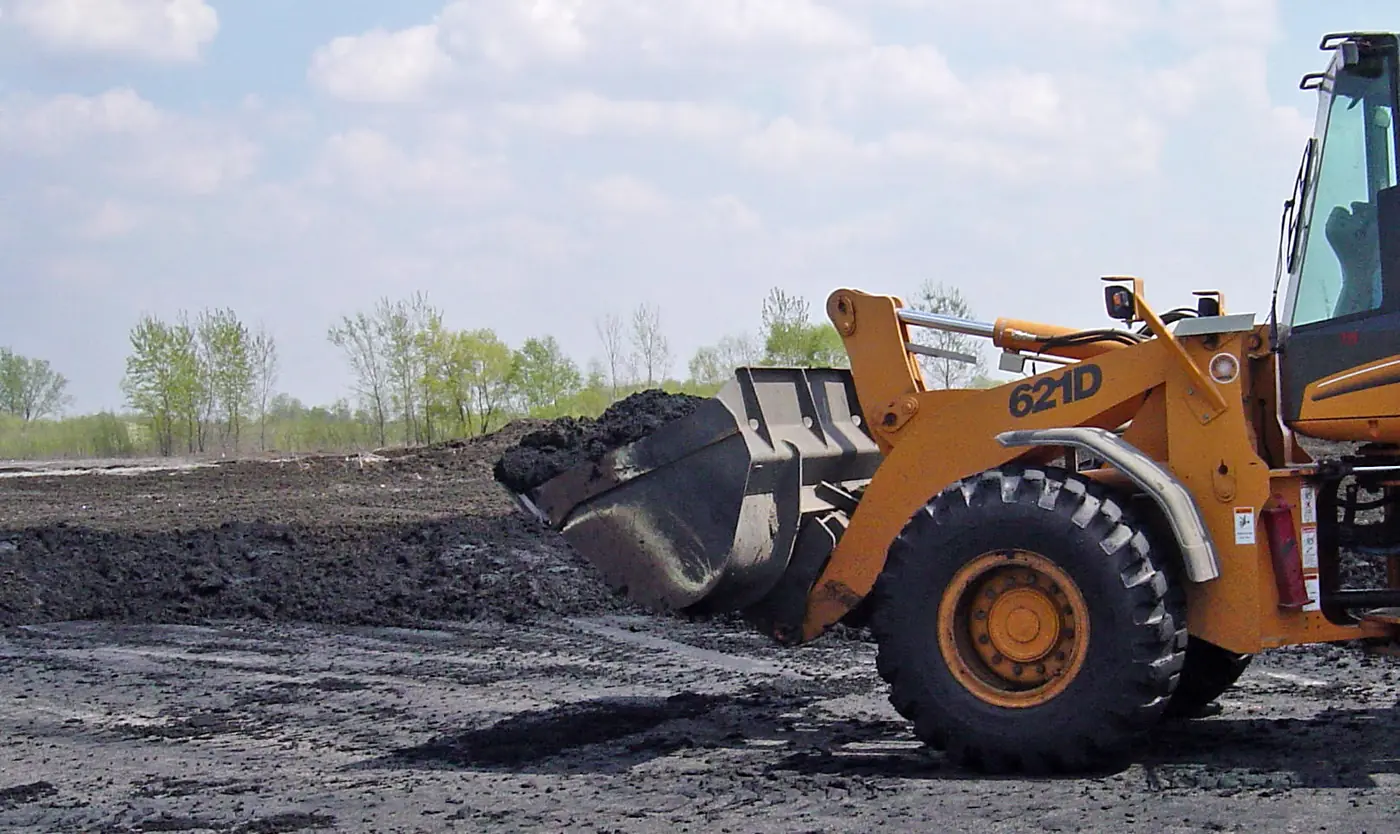 Biosolids being prepared for transport to fields in 2005. This photograph illustrates waste handling; it does not document a site assessed in the January 2025 PFAS findings.
Credit: Dana W. Kolpin / U.S. Geological Survey, public domain.
Biosolids being prepared for transport to fields in 2005. This photograph illustrates waste handling; it does not document a site assessed in the January 2025 PFAS findings.
Credit: Dana W. Kolpin / U.S. Geological Survey, public domain.
Who Pays for Cleaner Water?
By January 2025, the United States already had a substantial drinking-water commitment. EPA's 2024 PFAS rule came with estimated annualized implementation costs of about $1.5 billion, covering monitoring, administration, treatment or alternative supplies, and disposal of treatment residues. Annualizing spreads expenses incurred at different times into a comparable yearly figure; it is not a record of money already spent.[7]
EPA also estimated quantified health benefits of about $1.5 billion a year, while recognising that it could not put a price on all the benefits or costs. Continued exposure has costs of its own through illness and lost health, so the comparison needs to consider what happens if treatment is avoided as well as what treatment requires.[7]
Manufacturer settlements can help finance the work. A settlement between 3M and U.S. public water suppliers received final court approval in 2024, with a nominal payment cap of $12.5 billion and payments spread over years. Its scope was water suppliers' claims; the figure cannot stand in for the total cost of restoring contaminated land, protecting farms, or addressing every health impact.[8]
Even with a settlement, a community may still face continuing costs that are not fully covered. How much remains, and who pays it, depends on the contamination and the work needed locally.
The Value of Preventing New Pollution
Preventing releases, or capturing PFAS close to their source, can reduce how much contaminated water and soil later needs treatment. Once the chemicals have spread, recovering them becomes harder and more expensive. The January investigation makes the financial consequences of that difference clearer.[1]
Existing contamination still needs to be addressed, but limiting new releases can help keep the same supplies from being polluted again. For a water utility, fewer chemicals entering the water can mean less to capture and fewer contaminated materials to manage, reducing the expense carried into future budgets.
Sources
- Now we know the staggering costs of cleaning PFAS pollution for Europe
- Perfluoroalkyl and Polyfluoroalkyl Substances (PFAS)
- The Cost Methodology
- Treatment Options for Removing PFAS from Drinking Water
- Interim Guidance on the Destruction and Disposal of Perfluoroalkyl and Polyfluoroalkyl Substances and Materials Containing Perfluoroalkyl and Polyfluoroalkyl Substances—2024
- Draft Sewage Sludge Risk Assessment for PFOA and PFOS
- Benefits and Costs of Reducing PFAS in Drinking Water
- 3M Settlement with Public Water Suppliers to Address PFAS in Drinking Water Receives Final Court Approval