Endangered Fungi: The Overlooked Species Supporting Our Ecosystems
Fungi help plants obtain nutrients and break down dead material, but their decline can be difficult to notice because much of their activity is hidden. An expanded assessment by the International Union for Conservation of Nature…
Fungi help plants obtain nutrients and break down dead material, but their decline can be difficult to notice because much of their activity is hidden. An expanded assessment by the International Union for Conservation of Nature drew attention to this threat. After adding 482 newly assessed fungi, its Red List included 1,300 fungal species, at least 411 of which were threatened with extinction. [1]
Losing these organisms can affect more than the survival of individual mushrooms. It can also change the processes that allow the surrounding habitat to function.
The Hidden Lives of Endangered Fungi
The mushroom we see is the reproductive structure of a fungus, while much of its body may remain hidden in soil, wood or other living material. Fine threads called hyphae make up much of this body, forming a network known as mycelium. A mushroom only makes the fungus visible for part of its life, so its disappearance does not necessarily mean the organism has died. [2]
This makes it harder to determine which fungi need protection. If a species has only been recorded a few times, it may be rare, or people may simply have missed it. Repeated searches, careful identification and knowledge of the habitat help scientists distinguish between a decline and a lack of observations.
The Red List figures describe the species included in the assessment, rather than the proportion of all fungi at risk of extinction. Earlier assessments focused disproportionately on certain regions and conspicuous groups, often giving priority to species already thought to be threatened. [3] The results provide evidence for protecting the assessed species, but much of fungal diversity remains outside the list.
The Work That Keeps Ecosystems Growing
When a branch falls, wood-decaying fungi help break it down so its nutrients can be used by other organisms. Fungi in leaf litter do similar work, connecting the remains of older plants with the growth of new ones. Fungi themselves also become food for animals and other organisms. [4]
Some fungi form partnerships with living plants instead. Mycorrhizal fungi grow with plant roots and extend fine threads into the soil, helping the plant obtain water and mineral nutrients such as nitrogen and phosphorus. The plant supplies carbon-rich sugars and fats in return, produced using energy from sunlight. [5] Both organisms contribute to the exchange: the plant gathers light above ground, while the fungus reaches through the soil below it.
Through these partnerships, some of the carbon plants have captured from the atmosphere moves into fungal tissue and soil carbon pools. How long it stays underground depends on what happens afterward, including respiration and decomposition, so carbon transferred to fungi cannot all be treated as permanently stored. [6] Understanding their contribution to the carbon cycle requires studying both how carbon moves through them and how long it remains.
The Habitats Disappearing Around Them
These close relationships help explain why fungi are vulnerable to changes in the places they inhabit. The giant knight, Tricholoma colossus, forms mycorrhizal partnerships with pines and is associated with open, old-growth pine forests. Its assessment identifies clear-cutting and the conversion of old forests into managed woodland as major threats. It is rarely observed in forests regenerated after clear-cutting. [7]
If a fungus struggles to return after replanting, restoring tree cover alone may not restore the earlier ecosystem. The giant knight appears to have difficulty spreading and re-establishing, which makes keeping its existing old forest habitat particularly important.
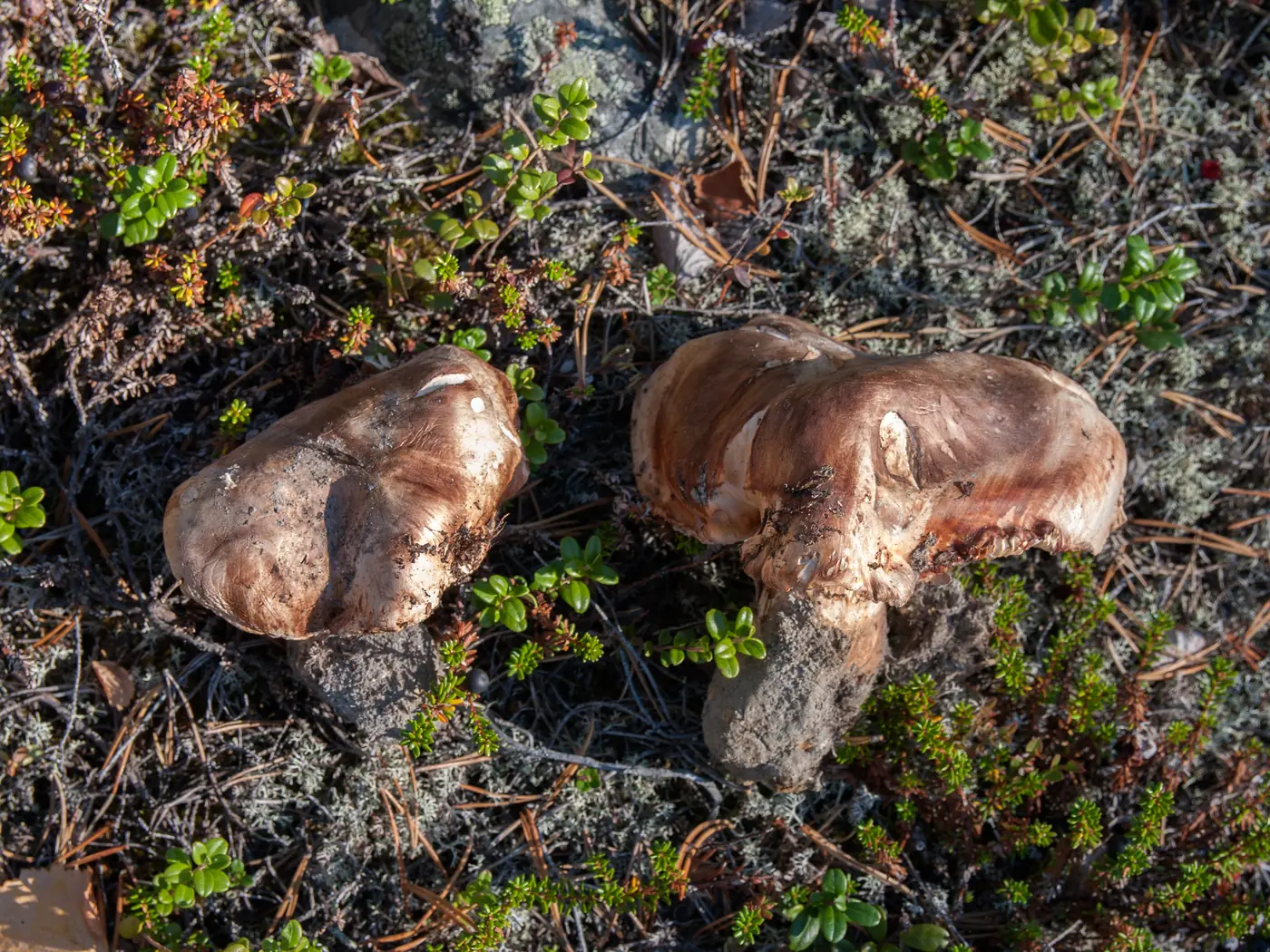 Giant knight (Tricholoma colossus), a fungus associated with old-growth pine forests.
Credit: caspar s / Wikimedia Commons, CC BY 2.0.
Giant knight (Tricholoma colossus), a fungus associated with old-growth pine forests.
Credit: caspar s / Wikimedia Commons, CC BY 2.0.
.jpg)
Grassland fungi face a related problem, although their habitat can deteriorate while remaining visibly green. The fibrous waxcap, Hygrocybe intermedia, belongs to a group associated with grasslands that are rich in fungi but low in nutrients. Its Red List assessment classifies it as Vulnerable and links its decline to the loss and deterioration of these habitats. Fertilisers, pesticides and changes in traditional management all contribute. [8]
Adding nutrients can damage conditions for these fungi, even if it seems beneficial to the grassland. Waxcap fruiting communities are sensitive to nitrogen enrichment and depend on suitable grazing or mowing without fertilisers and pesticides. Leaving the land unmanaged can also cause harm, so retaining the fungi may require continued use of the field under carefully chosen management.
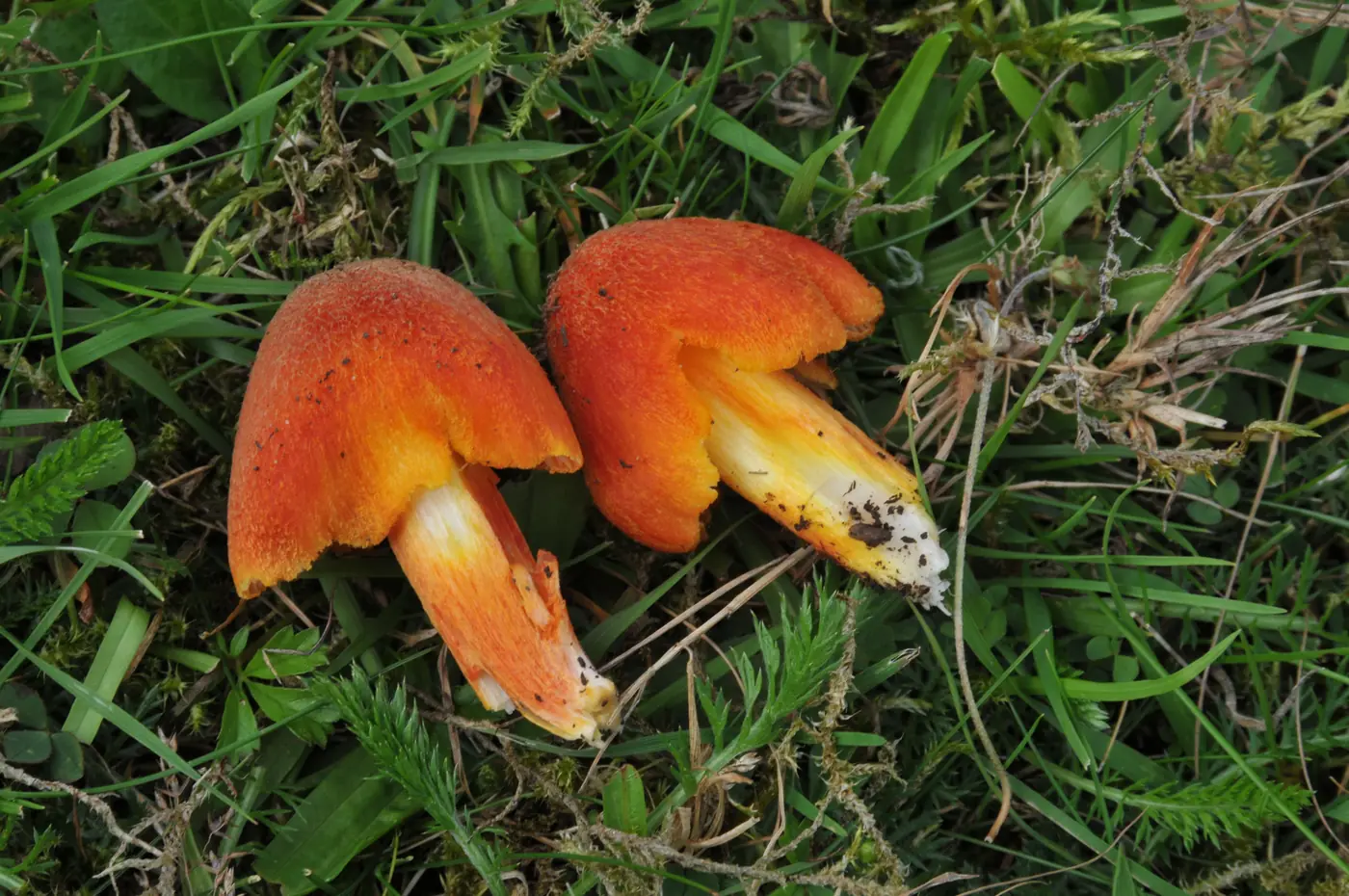 Fibrous waxcap (Hygrocybe intermedia), one of the threatened grassland fungi highlighted by the assessment.
Credit: Per Fadnes / Wikimedia Commons, CC BY 4.0.
Fibrous waxcap (Hygrocybe intermedia), one of the threatened grassland fungi highlighted by the assessment.
Credit: Per Fadnes / Wikimedia Commons, CC BY 4.0.

Climate change can alter fungal habitats and the disturbances they experience. The IUCN update identified changing fire patterns in the United States as a threat to more than 50 fungal species. One example was the Endangered Gastroboletus citrinobrunneus, whose habitat in California’s high Sierra Nevada has diminished as the composition of its mountain forests has changed. [1] A protected boundary alone cannot address changes taking place within the habitat, even where it limits development from outside.
Conservation Beneath the Surface
Protecting forest fungi involves retaining the conditions that different species use, including old-growth stands, living host trees and dead wood. A fungus living in partnership with roots needs something different from one feeding on a decaying log, so forest management needs to account for both. [4]
The waxcap example shows why conservation must also recognise valuable fungal habitats beyond forests. Grasslands maintained through suitable grazing or mowing deserve attention, including places whose fungal richness might be missed by surveys focused on plants and animals. [8]
Community observations can help researchers learn where fungi occur. Clear photographs, habitat details and reliable identification allow specialists to check records, making these contributions useful for assessments and conservation planning. [3] Revisiting a known site can add to a single observation and help establish what protection is needed.
Assessing a landscape’s health therefore involves looking beneath the trees, flowers and visible wildlife. The fungi in roots, soil and dead wood help sustain that landscape, and including them in surveys and management gives conservation a better chance of protecting those relationships.
Sources
- First 1,000 fungi on IUCN Red List reveal growing threats - IUCN Red List
- The Lost and Found Fungi project
- What Do the First 597 Global Fungal Red List Assessments Tell Us about the Threat Status of Fungi?
- Importance of Fungi in Forest Ecosystems
- Mycorrhizal Ecology
- Mycorrhizal mycelium as a global carbon pool
- Tricholoma colossus
- Hygrocybe intermedia