Electronic Waste: What Valuable Metals Are in Discarded Devices?
When a phone’s screen breaks or a component fails, the metals inside it do not necessarily lose their usefulness. Copper, gold and other materials may still be recovered, but they first have to be separated from a device in which…
When a phone’s screen breaks or a component fails, the metals inside it do not necessarily lose their usefulness. Copper, gold and other materials may still be recovered, but they first have to be separated from a device in which many different substances have been fitted into a small space.
Electronic waste also includes computers, televisions, refrigerators and other electrical equipment. The UN’s latest global inventory recorded 62 million tonnes in one year, of which only 22.3% was documented as formally collected and recycled.[1] This leaves a large supply of metals whose recovery depends on how discarded equipment is collected and treated.
Valuable Metals in Electronic Waste
Metals are used in electronics for particular properties. Copper conducts electricity through wiring and helps transfer heat, allowing many devices to operate.[2] Iron and aluminium also contribute substantial value across the wider waste stream, alongside precious metals that are present in much smaller quantities.[1]
Gold is particularly useful where electrical connections must remain reliable. Its conductivity and chemical stability allow it to perform in demanding electronic components; manufacturers can use thin coatings instead of making whole parts from it. Silver and palladium are also present in electronic scrap, including some multilayer ceramic capacitors, components that store electrical charge.[3] The amounts and combinations vary with the product and its age, so an old computer board and a modern phone should not be treated as identical sources of metal.[4]
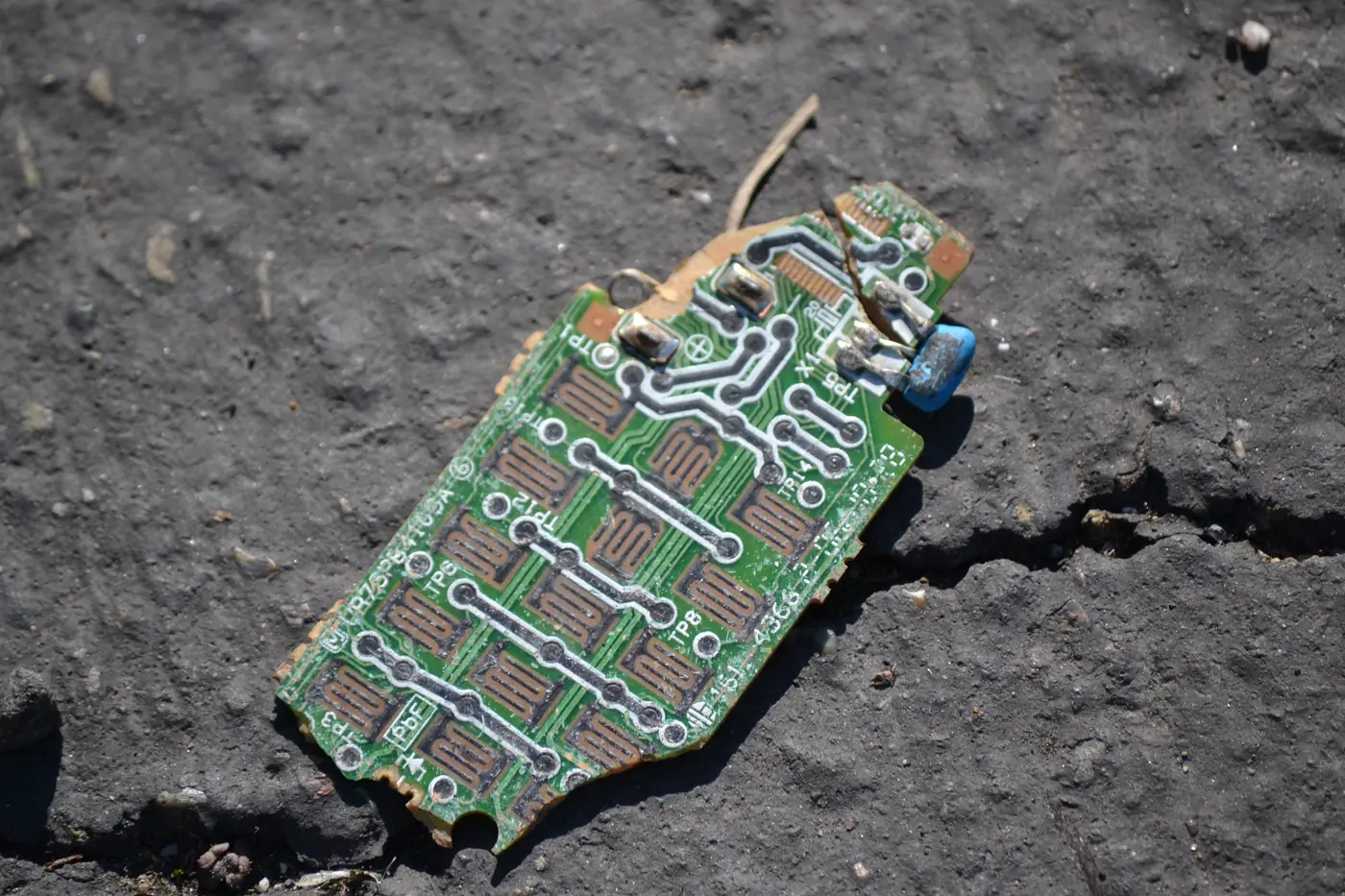 A broken circuit board illustrates how conductive pathways and components are combined in a small space.
Guinnog / Wikimedia Commons, CC BY-SA 3.0.
A broken circuit board illustrates how conductive pathways and components are combined in a small space.
Guinnog / Wikimedia Commons, CC BY-SA 3.0.

Batteries contain a different mixture. Lithium is used in lithium-ion batteries, and many rechargeable devices also contain battery materials with cobalt.[2] These elements are part of the chemical system that stores energy, so recovering them requires different treatment from copper wiring or circuit boards.
Some electronic components use rare-earth metals, a separate family that includes neodymium. Neodymium-based magnets provide strong magnetism in a compact form, making them useful in hard drives and other devices.[5] Gold and copper do not belong to this group, and a process that recovers them may not recover the rare earths in the same equipment.
The Gap Between Metal Content and Recovery
The UN estimated that the metals contained in that year’s discarded equipment were worth about US$91 billion.[1] Collection and processing still have to be paid for, so this material value is not the same as a recycler’s potential profit.
Before metals can be extracted, devices need to reach collection points and be transported and sorted for facilities that can handle their materials. The International Energy Agency identifies collection, infrastructure, traceability and investment as necessary for expanding recycling.[6] Even an efficient extraction process depends on a reliable supply of suitable devices reaching it.
The documented recycling percentage measures the mass of equipment entering formal collection and recycling, rather than the proportion recovered of each metal. Equipment outside these systems may enter ordinary rubbish or informal and undocumented operations.[1] Some of its metal may still be recovered, but the amount recovered and the environmental conditions can differ considerably.
Measuring tonnes alone can miss these differences. A process might recover bulky metal parts but lose smaller valuable components. Removing hard-drive magnets before further processing, for example, allows them to enter a treatment route suited to their materials.[5]
From Circuit Boards to Reusable Metals
Recovering metals from used products is often called urban mining. Some electronic scrap contains precious metals at much higher concentrations than mined ores, although the concentration varies widely.[4] This can make recovery attractive, but the metals still need to be separated from plastics, ceramics and other metals.
Processing commonly begins with dismantling. Batteries and circuit boards are removed for appropriate treatment, after which selected material can be shredded and sorted. Differences in magnetism, density and electrical conductivity help separate fractions of the mixture.[4] These steps concentrate useful materials; they do not automatically produce pure gold or copper.
Industrial smelting takes separation further. Heat produces a metal-rich mixture that needs additional refining, and copper can act as a collector for precious metals. Recovering the copper leaves residues from which gold and other valuable elements can be separated.[4]
Hydrometallurgy uses liquids to dissolve selected metals into a solution. Further chemical or electrical processes then separate and recover them. Industrial recovery can combine this approach with thermal stages, depending on what needs to be treated.[3]
Both approaches require environmental controls. Furnaces use energy and need their emissions managed, while chemical processing leaves reagents and contaminated liquids to handle.[3] Comparing recovery methods requires considering what each extracts, the resources it uses and what happens to the remaining material.
The Cost of Unsafe Recycling
Without appropriate controls, recovering metals can release hazardous substances into surrounding air, dust, soil and water. Open burning and poorly managed chemical treatment are examples, with WHO identifying lead and mercury among the substances associated with unsafe e-waste processing.[7] Obtaining a valuable metal does not remove the environmental consequences of the method used.
Exposure can extend beyond the person dismantling a device to people living and working nearby. Children are especially vulnerable because their bodies and nervous systems are still developing. WHO links prenatal and childhood exposure around informal e-waste recycling with outcomes including impaired neurodevelopment and changes in lung function.[7]
Repairing electronics and recovering their materials also provides income in communities where alternatives may be limited.[7] Improving conditions involves access to safer equipment, training and dependable collection and treatment networks. The IEA includes workforce training and investment in developing economies among its recommendations for expanding responsible recycling.[6]
Keeping Metals in Use
Repair and refurbishment keep a device’s assembled components useful for longer, along with the materials they contain. Once reuse is no longer practical, recycling can recover metals and reduce demand for newly mined resources. The IEA cautions, however, that recycling cannot remove the need for mining entirely.[6]
Product design influences both stages. On 20 June 2025, new EU ecodesign and energy-labelling rules began applying to covered phones and tablets placed on the market. They include requirements for more durable batteries, access to key spare parts and information about repairability.[8] Making a failed part easier to replace can prevent the rest of a device from becoming waste with it.
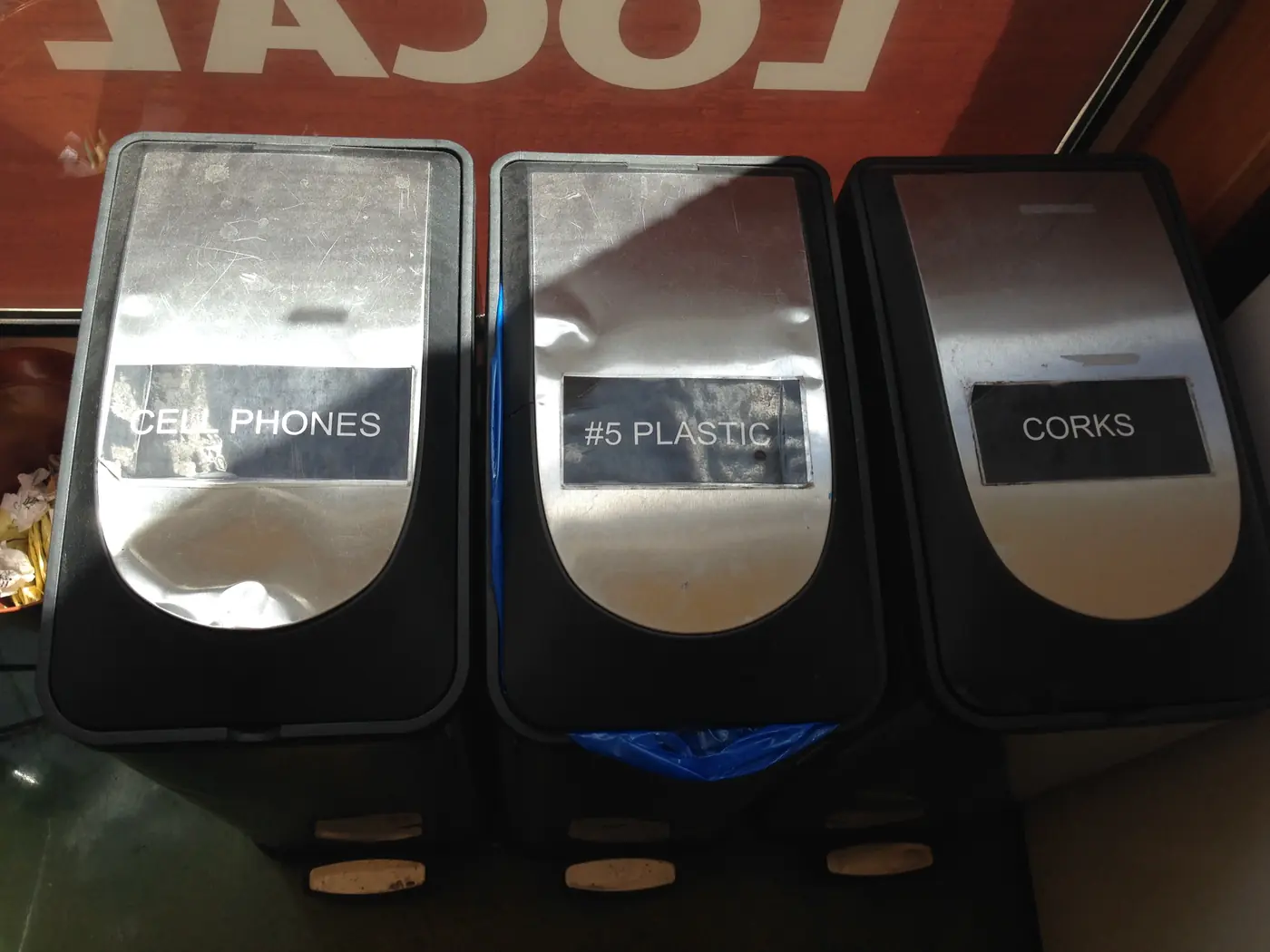 A dedicated phone collection bin separates devices from other discarded materials.
Victor Grigas / Wikimedia Commons, CC BY-SA 3.0.
A dedicated phone collection bin separates devices from other discarded materials.
Victor Grigas / Wikimedia Commons, CC BY-SA 3.0.

For someone clearing out old electronics, it helps to first consider whether the equipment could still be used. Repair, a suitable upgrade or donation may extend its working life. Personal information should be removed following the manufacturer’s guidance before a device is passed on. If it needs recycling, local collection services and manufacturer take-back programmes can be checked for the devices they accept.[9]
Lithium-ion batteries need an appropriate battery or electronics collection route because damage during waste collection or processing can cause fires. A recycling symbol does not mean that a battery belongs in ordinary household recycling.[10] Correct collection allows the device and its materials to reach a process that can handle them.
Sources
- The Global E-waste Monitor 2024
- Your mobile phone is powered by precious metals and minerals
- From Waste to Green Applications: The Use of Recovered Gold and Palladium in Catalysis
- Challenges and opportunities in the recovery of gold from electronic waste
- ORNL Licenses Rare Earth Magnet Recycling Process to Momentum Technologies
- Recycling of Critical Minerals
- E-waste and Child Health
- New EU rules for durable, energy-efficient and repairable smartphones and tablets start applying
- Electronics Donation and Recycling
- White Paper Summarizing the Findings from the U.S. Environmental Protection Agency’s Battery Labeling Outreach and Research (2021 to 2024)