Cyclone Gezani: The Storm That Devastated Madagascar
When Cyclone Gezani reached Madagascar’s eastern coast on February 10, 2026, it struck the port city of Toamasina with destructive winds that damaged buildings and essential infrastructure. The World Meteorological Organization…
When Cyclone Gezani reached Madagascar’s eastern coast on February 10, 2026, it struck the port city of Toamasina with destructive winds that damaged buildings and essential infrastructure. The World Meteorological Organization reported winds of about 180 kilometres per hour, with gusts reaching 230 kilometres per hour. [1] Across the affected areas, homes, roads and bridges were damaged, and hundreds of thousands of people faced the aftermath. In its March 1 response update, the Southern African Development Community reported 62 deaths. [2]
The wind weakening did not end the emergency for survivors. Families needed shelter after their homes were damaged, while disrupted electricity and water supplies made daily life more difficult and increased health risks. [3] They were trying to manage the loss of belongings at the same time that essential services were struggling to operate.
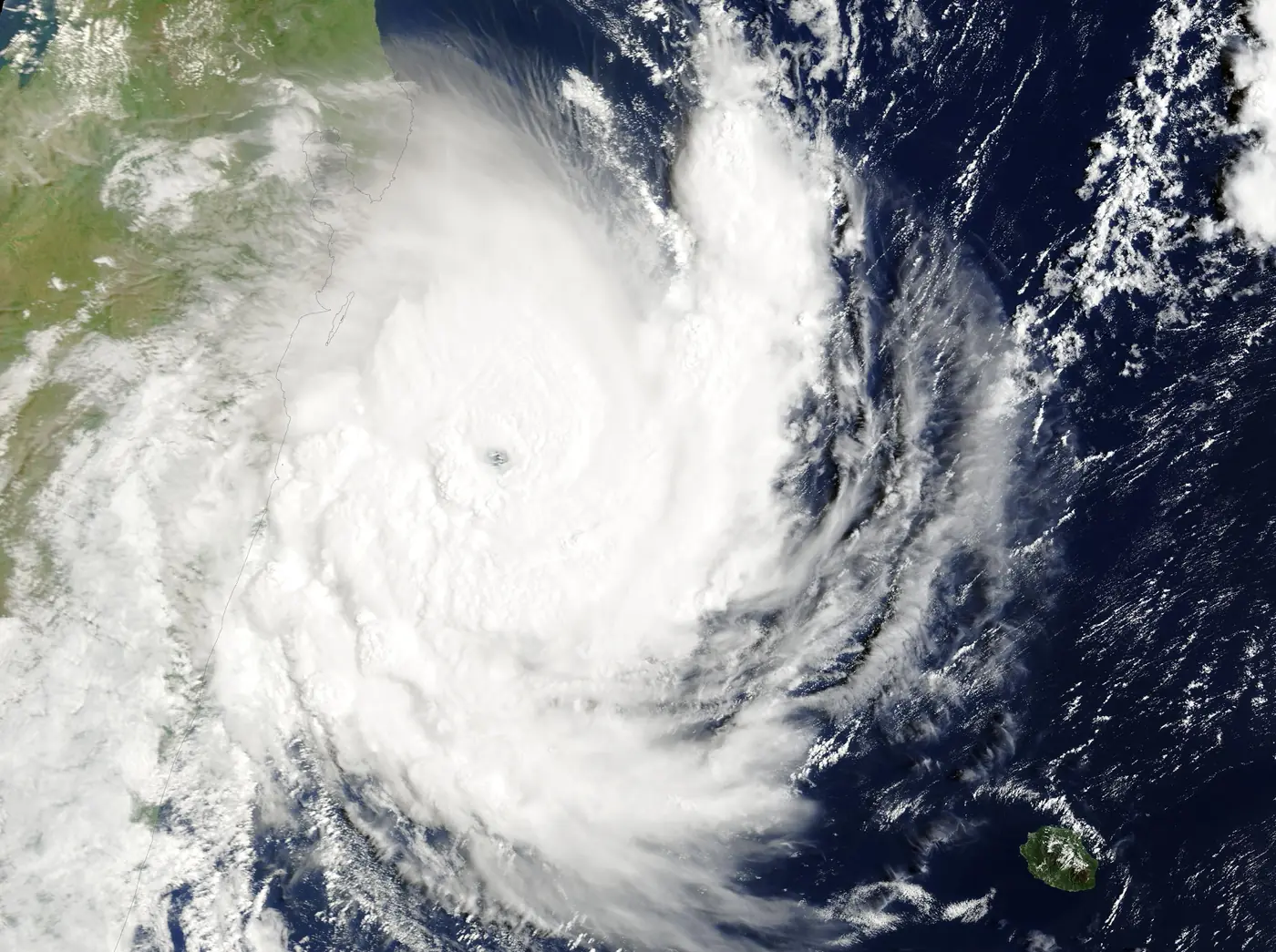 NASA’s Terra satellite captured this true-colour image of Gezani on February 10, 2026, before landfall.
Credit: MODIS Land Rapid Response Team, NASA GSFC.
NASA’s Terra satellite captured this true-colour image of Gezani on February 10, 2026, before landfall.
Credit: MODIS Land Rapid Response Team, NASA GSFC.
Cyclone Gezani’s Arrival in Madagascar
Gezani formed over the southwest Indian Ocean and strengthened on its approach to Madagascar. NASA’s observations showed a well-organised storm near the east coast, followed by weakening winds as its centre moved inland. [4] This change is connected to the ocean’s role in supplying a tropical cyclone with energy.
Warm seawater adds moisture to the air, which rises and condenses into clouds. The heat released during condensation helps sustain thunderstorms and circulation around the cyclone’s centre. Moving over land cuts off this ocean supply of heat and moisture, usually weakening the winds, although heavy rain can continue inland. [5] Gezani weakened as it crossed Madagascar but still brought torrential rain and flooding before reaching the Mozambique Channel. [6]
Madagascar was also still responding to Cyclone Fytia, which had struck the northwest on January 31, ten days before Gezani reached the east. Although the storms hit different areas, both required the same national response capacity. [6] Rescue teams and relief supplies were already needed elsewhere when Gezani arrived, adding to the demands of the new disaster.
Toamasina’s Broken Lifelines
Toamasina, also known as Tamatave, is Madagascar’s second-largest city and its main port. [6] Gezani brought much of its destructive force directly into this urban area. UNICEF’s later assessment distinguished the storm from Fytia: whereas Fytia’s impacts were characterised by extensive flooding, Gezani caused widespread destruction primarily through extreme winds. Schools, health facilities, water systems and electricity networks were all damaged. [7]
Damage to roofs affected both homes and public services. A house might become unsafe to live in, while a school could lose the space children used for lessons. UNICEF’s April–May situation report recorded more than 102,000 homes damaged or destroyed and 761 schools affected by Gezani. [8] Families repairing their homes also faced disruption to the buildings and services they normally relied on.
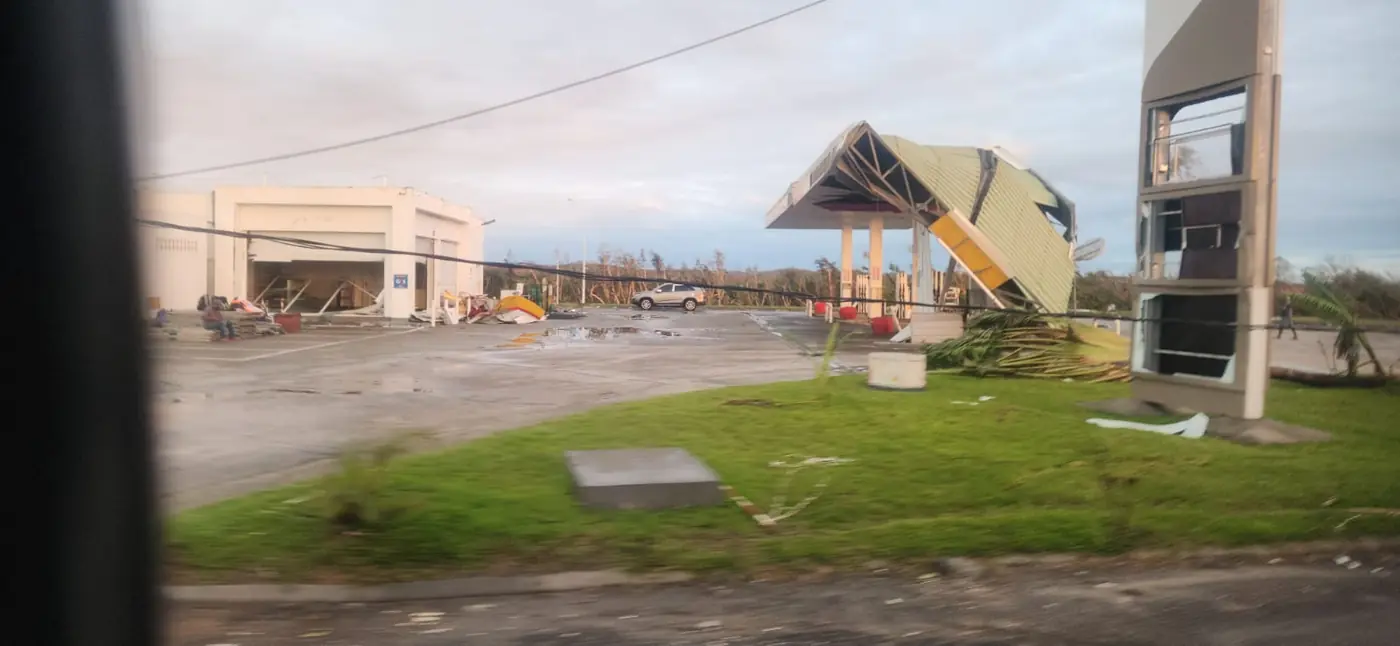 A damaged service station in Toamasina after Cyclone Gezani, photographed on February 24, 2026.
Credit: Mammysou17 / Wikimedia Commons, CC0 1.0.
A damaged service station in Toamasina after Cyclone Gezani, photographed on February 24, 2026.
Credit: Mammysou17 / Wikimedia Commons, CC0 1.0.

Electricity failures affected other systems too. UNICEF reported that widespread outages interrupted the city’s water supply and increased the risk of waterborne disease. [3] The RN2, the main road into Toamasina, was also closed for three days, delaying assistance and supplies. [6] Recovery depended partly on restoring the same infrastructure that the storm had damaged.
A joint inspection of health facilities in Toamasina found damage to operating theatres, emergency rooms, intensive care units and medical equipment. Power cuts disrupted the refrigeration needed to keep vaccines usable, while essential medicines were in short supply. [9] Restoring care required addressing the buildings, equipment, electricity and supplies together.
Families Facing Multiple Losses
UNICEF’s account of Kambana Jacqueline and her children in Toamasina’s Salazamay neighbourhood describes how these losses overlapped for one family. They initially stayed home after hearing warnings, then moved to a nearby shelter with a few essentials as conditions worsened. When they returned the next morning, part of their home was still flooded and its roof had been torn away. [10]
Jacqueline’s older child, Jean de Dieu, had also lost some school supplies and faced damage to his school. Her younger child had a disability and needed constant care. Evacuation had helped protect the family during the storm, but they still had to manage housing, education and care afterward. [10]
Many families encountered those problems in crowded temporary shelters. UNICEF warned that displacement increased children’s exposure to family separation, violence, exploitation and psychological distress. [3] A place to sleep was essential, but families also needed clean water, support for children and a route back to more stable living conditions.
Damage to education facilities interrupted learning for nearly 60,000 children, according to UNICEF’s later reporting. [7] Reopening classrooms could restore some routine while parents and caregivers dealt with repairs and lost possessions. Education was therefore part of responding to the emergency as well as the longer recovery.
Warnings That Enabled Early Action
Preparation had begun before Gezani reached land. On February 9, forecasts met a threshold in the World Food Programme’s anticipatory-action system, with an intense cyclone expected to pass within 100 kilometres of the coast and winds above 166 kilometres per hour. This released funding and sent a team to eastern Madagascar. [11]
Making funding available at this stage allowed assistance to be organised before conditions deteriorated. The World Meteorological Organization reported that advance warnings helped humanitarian agencies position supplies, while pre-arranged World Food Programme funding provided cash assistance to 30,000 vulnerable people and supported preparation of food stocks. [1]
Once the cyclone had passed, Madagascar’s National Bureau for Risk and Disaster Management led the response, supported by humanitarian partners. [3] The immediate tasks included helping people reach safety and supplying shelter and food; restoring water, health care and education required a longer effort. Regional responders subsequently identified water and sanitation, food security and the repair of public infrastructure as urgent recovery priorities. [2]
Future warnings also need to connect forecasts with transport, usable shelters, supplies and funding. People and local responders are better able to act before a storm when these resources are available in time.
Cyclones in a Warming Climate
Preparing for future cyclones also requires understanding how their hazards are changing. The Intergovernmental Panel on Climate Change concludes with high confidence that human-caused climate change increases heavy rainfall associated with tropical cyclones. [12] Its assessment also projects increases in average peak cyclone winds and the proportion of intense storms globally as warming continues. This can occur even if the total number of tropical cyclones decreases or remains broadly unchanged. [13]
These findings describe changes in cyclone hazards more broadly. They do not establish how much warming affected Gezani’s particular winds or rainfall, which would require an analysis of the event itself. The amount of destruction alone cannot answer that question.
The damage does identify practical needs for Madagascar. Better protection for homes, schools, health facilities and water systems would address the failures experienced during Gezani, while climate information can inform the standards used in rebuilding.
The Work of Recovery
Recovery progressed beyond the emergency conditions recorded in February. By the end of May, UNICEF reported that essential services and infrastructure in the Gezani-affected Atsinanana region had largely been restored. Partners had established 324 temporary learning spaces, and roof repairs had restored 120 schools. These were signs of substantial progress, although temporary classrooms still represented an interim solution. [8]
Some communities remained harder to reach. Access to Ifito and Satrandroy was still difficult, so UNICEF and local authorities sent teams carrying hygiene supplies and temporary classroom materials on foot. The journey took three to four days each way. [8] Restoring services in the city did not meet all the needs of these more isolated areas.
Health responders called for damaged hospitals and clinics to be rebuilt while temporary facilities maintained access to care. [9] This approach addresses an immediate need while allowing reconstruction to improve protection against future storms. The same consideration applies to other services that families need throughout recovery.
A secure roof, reliable drinking water, an operating clinic and an open school make recovery tangible for families returning home. Rebuilding these services so they can better withstand another cyclone would extend the benefits of the repairs beyond the present emergency.
Sources
- Tropical cyclone Gezani hits Madagascar and threatens Mozambique
- SADC Emergency Response Team concludes deployment in Madagascar following Tropical Cyclone Gezani
- Successive cyclones put children at risk in Madagascar
- Tropical Cyclone Gezani Batters Madagascar
- How Does a Hurricane Form?
- Cyclones FYTIA & GEZANI Response Plan
- Speed saves lives
- Madagascar Humanitarian Situation Report #1 April/May 2026
- SADC Emergency Response Team Joins Madagascar to inspect health infrastructure following Tropical Cyclone Gezani
- Jacqueline and her family face the devastation caused by Cyclone Gezani
- Madagascar: Anticipatory Actions Cyclone Gezani 2026
- Summary for Policymakers
- Chapter 12: Climate Change Information for Regional Impact and for Risk Assessment