Coral-Eating Starfish and the Great Barrier Reef’s Growing Pressures
Dive teams were deployed between Cairns and Lizard Island in early 2026 as a new wave of coral-eating starfish developed on the northern Great Barrier Reef. The Reef Authority’s work aimed to suppress the fifth recorded outbreak…
Dive teams were deployed between Cairns and Lizard Island in early 2026 as a new wave of coral-eating starfish developed on the northern Great Barrier Reef. The Reef Authority’s work aimed to suppress the fifth recorded outbreak cycle. These starfish consume living coral tissue, leaving white scars on the skeleton beneath. [1]
The reef is also under pressure from climate change, storms, poor water quality and fishing. When several disturbances occur close together, surviving corals have less time to grow and replace what has been lost. The effect of the starfish depends partly on these surrounding conditions and how much additional damage the reef can recover from. [2]
Crown-of-Thorns Starfish on the Great Barrier Reef
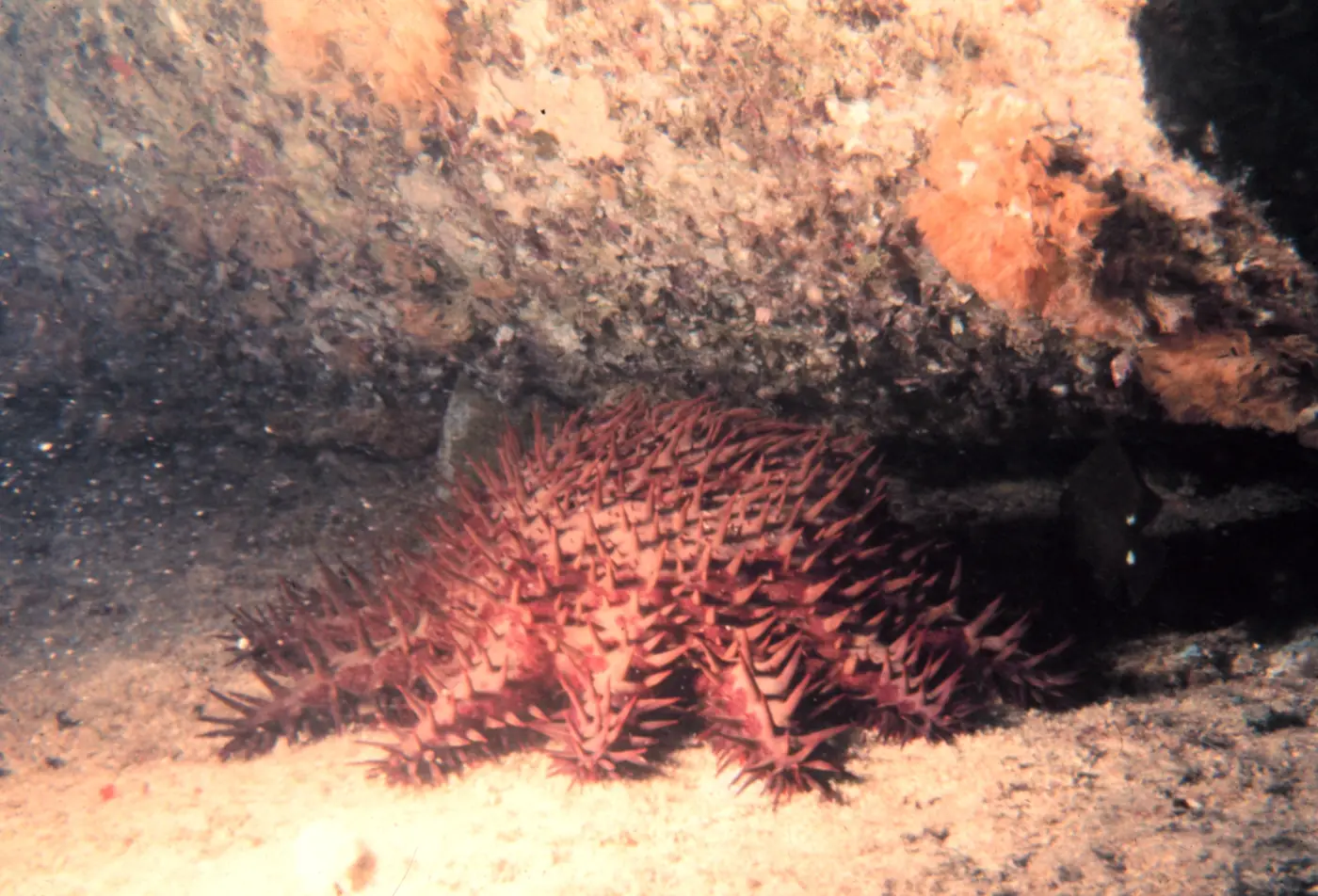
An illustrative photograph of a crown-of-thorns starfish; the location is not established.
Credit: Dr. James P. McVey / NOAA Sea Grant Program, public domain.

Crown-of-thorns starfish occur naturally on the Great Barrier Reef. At low densities, coral growth can keep up with the amount they eat. An outbreak occurs when the starfish collectively consume coral faster than it can be replaced. [3]
To feed, a starfish extends its stomach through its mouth and over the coral. Enzymes digest the living tissue, which it then absorbs. The pale area left behind is exposed skeleton where tissue previously covered the surface.
The number of starfish therefore changes the effect of their feeding. Coral may grow fast enough to accommodate a small population, while larger concentrations can consume it faster than it recovers. A native predator can become destructive when its abundance exceeds what the surrounding coral community can support.
The Conditions Behind an Outbreak
A mature female can release millions of eggs, and currents can carry the larvae to other reefs. This allows population growth in one location to contribute to outbreaks elsewhere. Managers closely monitor the northern initiation area because earlier outbreak waves have spread along the Reef over many years. [1][4]
The conditions that allow those populations to grow are more complicated. Removing natural predators through fishing can reduce the pressure on starfish populations. An analysis combining long-term reef monitoring and fisheries data found crown-of-thorns densities were about 2.8 times higher on reefs open to fishing than in no-take reserves. That supports protecting predator populations as part of outbreak management, although it does not establish fishing as the sole cause of every outbreak. [5]
Nutrients may also influence how many larvae survive. Runoff can encourage phytoplankton, the microscopic organisms that starfish larvae eat. With more food available, more larvae may survive and develop into later life stages.
However, the contribution of land-based nutrients to actual outbreaks remains unresolved. The Reef Authority’s 2024 Outlook Report describes a weak modelled link between runoff and phytoplankton production in the main outbreak initiation zone, where oceanographic processes may supply important nutrients. Runoff is a plausible contributor under some conditions, but the evidence does not support treating it as a universal explanation. [6]
Growing Pressures on Coral Recovery
Starfish feeding scars and coral bleaching can both appear white, but they result from different processes. Bleaching happens when stressed corals lose microscopic algae from their tissues. These algae provide much of the coral’s food and colour, so their loss leaves it pale and vulnerable. The coral may still be alive and recover if conditions improve, although prolonged stress can kill it. [7]
At a feeding scar, the tissue has already been eaten. An outbreak can therefore remove living coral from a reef that is also trying to recover from heat stress. Whether it rebuilds depends on the coral remaining and how its growth compares with continuing losses.
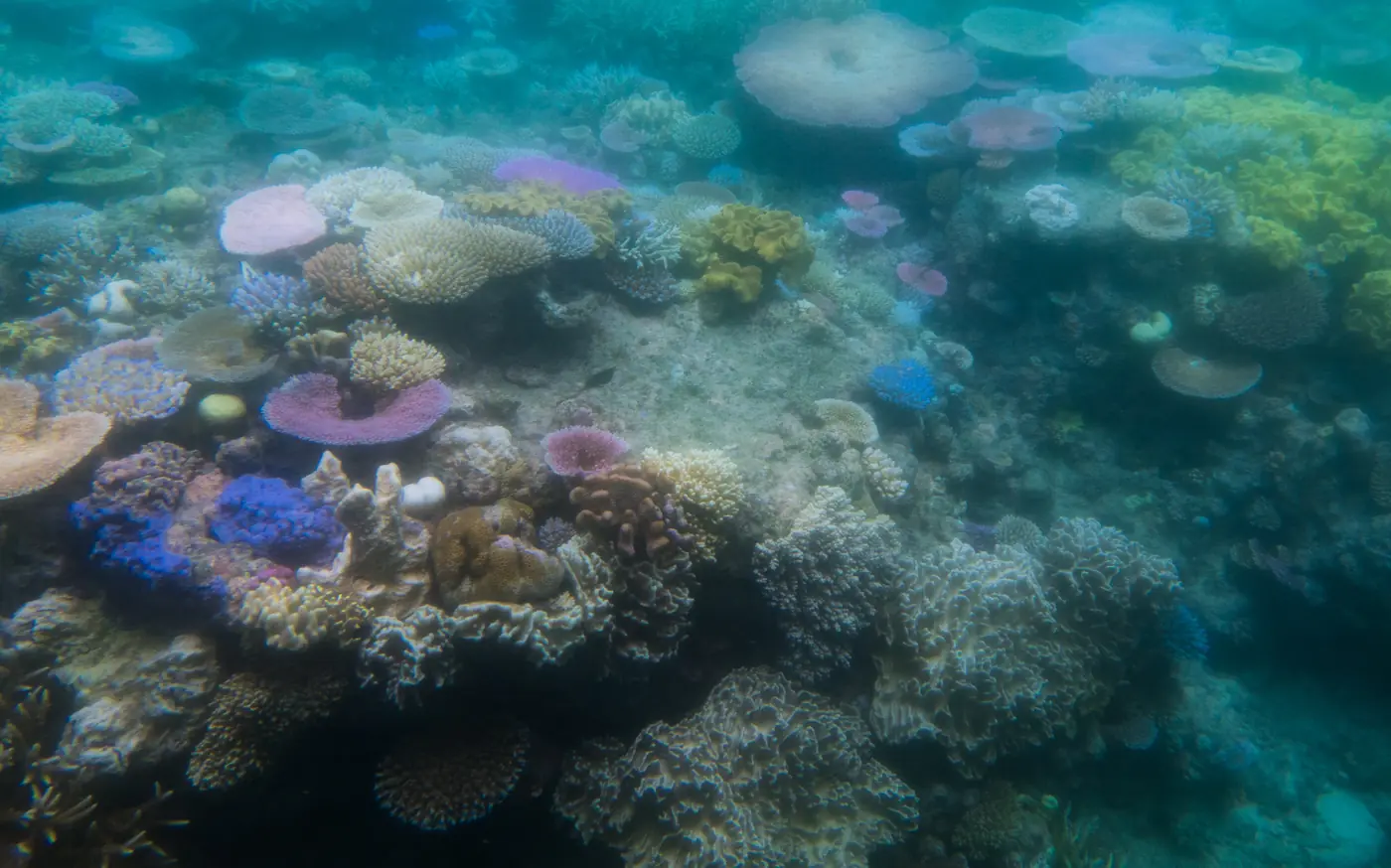
Coral bleaching photographed at Agincourt Reef in 2016.
Credit: Jay Galvin / Wikimedia Commons, CC BY 2.0.

Cyclones can damage coral communities, while increasingly frequent climate disturbances reduce the time between damaging events. If starfish consume surviving coral during those intervals, less remains to help rebuild the reef. [8]
Sediment can slow recovery by reducing underwater light, smothering adult corals and making it harder for young corals to establish. Improving water quality is useful even where the link between nutrient runoff and starfish outbreaks is uncertain, because it also improves the conditions in which coral needs to grow. [6]
An Uneven Recovery
Recent monitoring shows that recovery is still possible. The Australian Institute of Marine Science’s 2025–26 assessment surveyed 121 reefs and found that hard coral cover was stable or increasing across much of the Great Barrier Reef. Northern coral cover rose, while changes in the central and southern regions remained within the estimates’ margins of error. [9]
The survey also found established starfish outbreaks on five reefs and an emerging fifth outbreak wave in the north. No severe outbreaks were recorded within the surveyed sample. Coral cover can increase at the same time as a threat develops, so these findings do not contradict one another.
Most northern surveys took place before Cyclone Narelle, so they did not resolve its full effects. Coral cover also measures only the proportion of seafloor occupied by living hard coral. It does not describe which corals are present or how diverse the community is.
An increase in living coral is encouraging, but regional averages may conceal losses at individual reefs. They also do not establish that the pressures responsible for earlier declines have ended.
Protecting the Coral That Remains
Managers can reduce the pressure from starfish directly. Teams survey reefs and locate the animals, then use vinegar or ox-bile injections to bring their numbers down to ecologically sustainable levels. The aim is to reduce consumption enough for the coral community’s growth to keep pace. [4]
Evidence suggests that timely, sustained intervention can protect substantial areas. A study comparing successive outbreak waves found that sufficient control effort coincided with coral recovery across entire reef sectors. In the Townsville sector, effective suppression accompanied a 44% relative increase in coral cover, compared with a 37% decline during the preceding outbreak wave. Those figures describe changes within that sector, rather than an increase across the whole Great Barrier Reef. [8]
Acting before extensive losses occur protects coral that is still alive. Reducing breeding populations may also lower the number of larvae reaching nearby reefs. Delaying until much of the coral has been consumed leaves the ecosystem with more to replace.
Starfish control needs to accompany improved water quality, healthy predator populations and lower greenhouse gas emissions. The Reef Authority identifies climate change as the main reason for the Reef’s poor long-term outlook. Local management can help coral recover when conditions allow, while limiting future warming helps preserve those opportunities. [2]
Sources
- Star Wars on the Great Barrier Reef
- Executive summary
- Coral predator outbreaks
- Crown-of-thorns starfish control program
- Fish predators control outbreaks of Crown-of-Thorns Starfish
- 6.5.2 Vulnerability of the ecosystem to land-based runoff
- What is coral bleaching?
- Protecting Great Barrier Reef resilience through effective management of crown-of-thorns starfish outbreaks
- Annual Summary Report of Coral Reef Condition 2025/26