Conflict Debris and the Environmental Cost of War in Gaza
Israel’s bombardment of Gaza has left homes and neighbourhoods in ruins, with concrete, roofing, wiring and household possessions covering places where people need shelter and hope to rebuild. As this material remains in…
Israel’s bombardment of Gaza has left homes and neighbourhoods in ruins, with concrete, roofing, wiring and household possessions covering places where people need shelter and hope to rebuild. As this material remains in the landscape, it creates environmental hazards that can persist long after the initial destruction. [1]
The United Nations Environment Programme (UNEP), in its assessment published on 18 June 2024, estimated over 39 million tonnes of debris by May. That represented more than 107 kilograms per square metre, averaged across Gaza. The rubble obstructed humanitarian access and the return of displaced residents. [1]
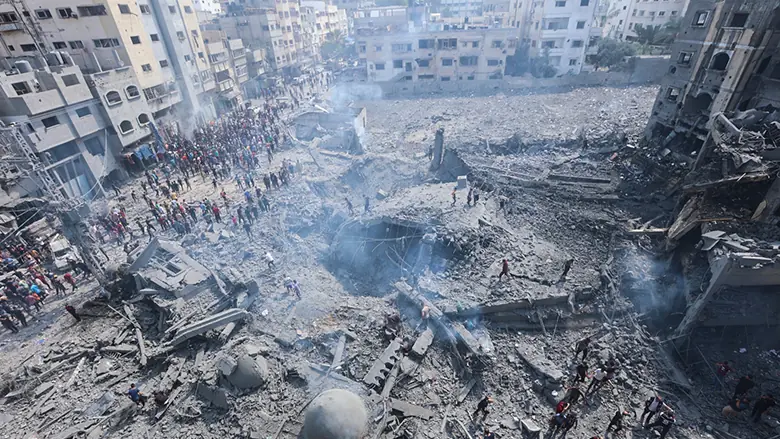 Destruction in Al-Shati refugee camp, shown in the World Bank’s April 2024 release on infrastructure damage.
Credit: Ahmed Zaqout / World Bank.
Destruction in Al-Shati refugee camp, shown in the World Bank’s April 2024 release on infrastructure damage.
Credit: Ahmed Zaqout / World Bank.
The Hazards Inside Conflict Debris
Debris contains more than concrete and steel. Asbestos, household chemicals, industrial substances, medical waste and explosive remnants may be mixed into the wreckage, so the material from a damaged hospital or factory can require different handling from that of another ruined building. [1]
When a product containing asbestos breaks, it can release microscopic fibres into the air. Inhaling these fibres can cause diseases such as lung cancer and mesothelioma, sometimes decades after exposure. WHO and UNEP described this process in earlier guidance on earthquake debris, since damage to the material itself creates the hazard. [2]
Demolishing a wall or loading broken roofing onto a truck can release more fibres, exposing workers and people nearby during the cleanup. Measures to limit that exposure are therefore needed as a neighbourhood is cleared. [2]
Explosive remnants add an immediate danger to that slower health risk. These include weapons that have been fired or dropped but failed to explode. At a UN briefing on 1 May 2024, the United Nations Mine Action Service (UNMAS) reported that its teams had encountered unexploded ordnance during missions to northern Gaza. The agency said that limited access prevented a reliable assessment of the extent of contamination. [3]
A route through rubble cannot be assumed safe simply because people have already used it. UNMAS described explosive-hazard assessments and risk education as essential to humanitarian operations, together with expanded specialist capacity. Access, personnel and equipment would determine what could be cleared, and methods were still being planned to deal with the exceptional volume of debris. [3]
The Breakdown of Water and Waste Services
Damage to infrastructure can also expose people to pollutants by interrupting essential services. In June, UNEP reported that all five wastewater treatment plants in Gaza had shut down. Sewage was contaminating coastal waters, beaches, soil and freshwater, spreading disease-causing organisms and other pollutants into places where people lived and obtained essential resources. [4]
Clean water is needed for washing hands, cleaning utensils and maintaining toilets as well as for drinking. When sanitation breaks down and water is scarce, it becomes harder to maintain these practices, increasing the danger of infections spreading.
UNICEF’s reporting on 10 June described these difficulties through displaced families’ experiences. One mother, Wisam, said she walked more than a kilometre to collect water that was insufficient and dirty. She described being able to bathe her family only once every two weeks. Such accounts show how damaged services turn hygiene into a daily struggle, even when families understand what they need to do. [5]
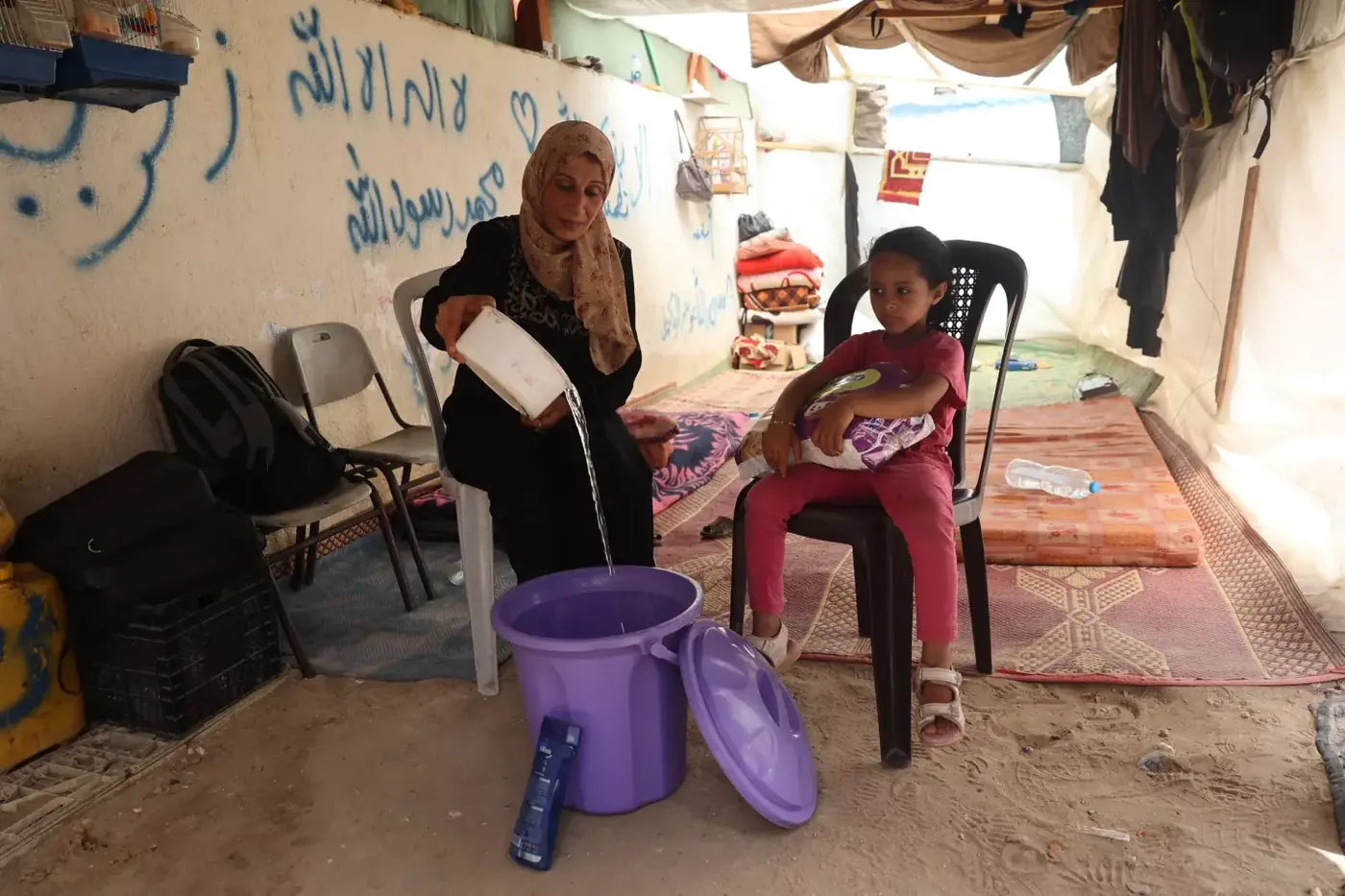 A photograph accompanying UNICEF’s 10 June 2024 account of displaced families’ difficulties obtaining water and hygiene supplies.
Credit: © UNICEF-SoP/2024 / UNICEF.
A photograph accompanying UNICEF’s 10 June 2024 account of displaced families’ difficulties obtaining water and hygiene supplies.
Credit: © UNICEF-SoP/2024 / UNICEF.
UNEP also reported damage to five of Gaza’s six solid-waste management facilities. At the same time, shortages of cooking gas forced families to burn wood, plastics and other waste, creating additional exposure to smoke. Publicly available air-quality measurements were lacking, however, so although pollution was a substantial concern, its precise concentration could not be established. [4]
Damage to Farmland and Food Production
Farmland beyond residential areas had also suffered extensive damage. An assessment released by UNOSAT and the Food and Agriculture Organization on 13 June found that approximately 57% of Gaza’s cropland had been damaged as of May. About 8,660 hectares were affected, including land used for field crops, vegetables and orchards. [6]
By comparing vegetation health and density with earlier years, the analysis linked deterioration to activities including razing, heavy vehicle movements, bombing and shelling. This damage reduces the land's ability to produce food at a time when access to food is already under severe pressure. Restoring crops therefore forms part of the humanitarian response as well as longer-term recovery. [6]
Although damaged vegetation shows changes in the landscape, it does not establish whether the soil is chemically unsafe. UNEP identified possible chemical and heavy-metal contamination of soil and the Coastal Aquifer as concerns requiring sampling and analysis. The extent of contamination remained unresolved. [1]
The Environmental Work Behind Reconstruction
The financial scale was already enormous. A World Bank and UN assessment released in April estimated approximately US$18.5 billion in damage to Gaza’s physical infrastructure through the end of January 2024. That figure covered an earlier period of destruction and measured damage to assets; it was not a complete bill for rebuilding or environmental recovery. [7]
The same assessment identified essential services, shelter and food production as early recovery priorities. These needs affect each other: damaged access roads make repairing a water system difficult, while rebuilding a home does little to restore everyday life if sanitation is still unavailable. [7]
Debris management has to follow a sequence that accounts for these connections. Explosive hazards need specialist assessment, and asbestos-containing materials need to be identified, separated and disposed of under controlled conditions. WHO’s existing guidance also called for trained personnel and measures to prevent fibres escaping during handling and transport. Without those controls, moving hazardous material can expose another community. [2][3]
Some concrete can be recovered for use in rebuilding. After the hostilities in 2021, UNDP described a Gaza rubble-removal project that would take concrete to a designated crushing site and recycle it into road rehabilitation materials. Recovering suitable concrete can therefore help restore access, provided hazardous waste is kept out of the material being recycled. [8][2]
Clearing ruined homes also involves human remains that require sensitive handling, along with questions of ownership and consent. [1] Affected Palestinians, including local professionals and communities, need to participate in this work. UNEP’s call in June for a ceasefire and environmental assessment addressed the conditions necessary to begin. Rebuilding everyday life depends on safe water, usable land and homes that people can reach safely. [4]
Sources
- Environmental Impact of the Conflict in Gaza: Preliminary Assessment of Environmental Impacts
- Asbestos - hazards and safe practices for clean up after earthquake
- UNMAS - Press Conference: Update on Mine Action - 01 May 2024
- Damage to Gaza causing new risks to human health and long-term recovery - new UNEP assessment
- In the Gaza Strip, families enduring war and longing for peace
- UNOSAT and FAO Reveal Substantial Increase in Damage to Gaza's Cropland Amid Ongoing Conflict
- Joint World Bank, UN Report Assesses Damage to Gaza’s Infrastructure
- Japan Contributes US$3 Million for Removal of Rubble in Gaza