Beavers Return to England: Rewilding Through Nature’s Engineers
After being hunted to extinction centuries ago, beavers have returned to England. Their presence can change the rivers around them, as dam building, channel digging and tree felling turn sections of stream into ponds and wet…
After being hunted to extinction centuries ago, beavers have returned to England.[1] Their presence can change the rivers around them, as dam building, channel digging and tree felling turn sections of stream into ponds and wet ground. These changes also create habitat for other species.[2]
Rewilding aims to restore the natural processes that sustain ecosystems, and beavers can help by changing the landscape through their everyday behaviour. However, the wetlands they create can extend across property boundaries. Their return therefore involves considering how people will live alongside these changes, as well as how wildlife will benefit from them.
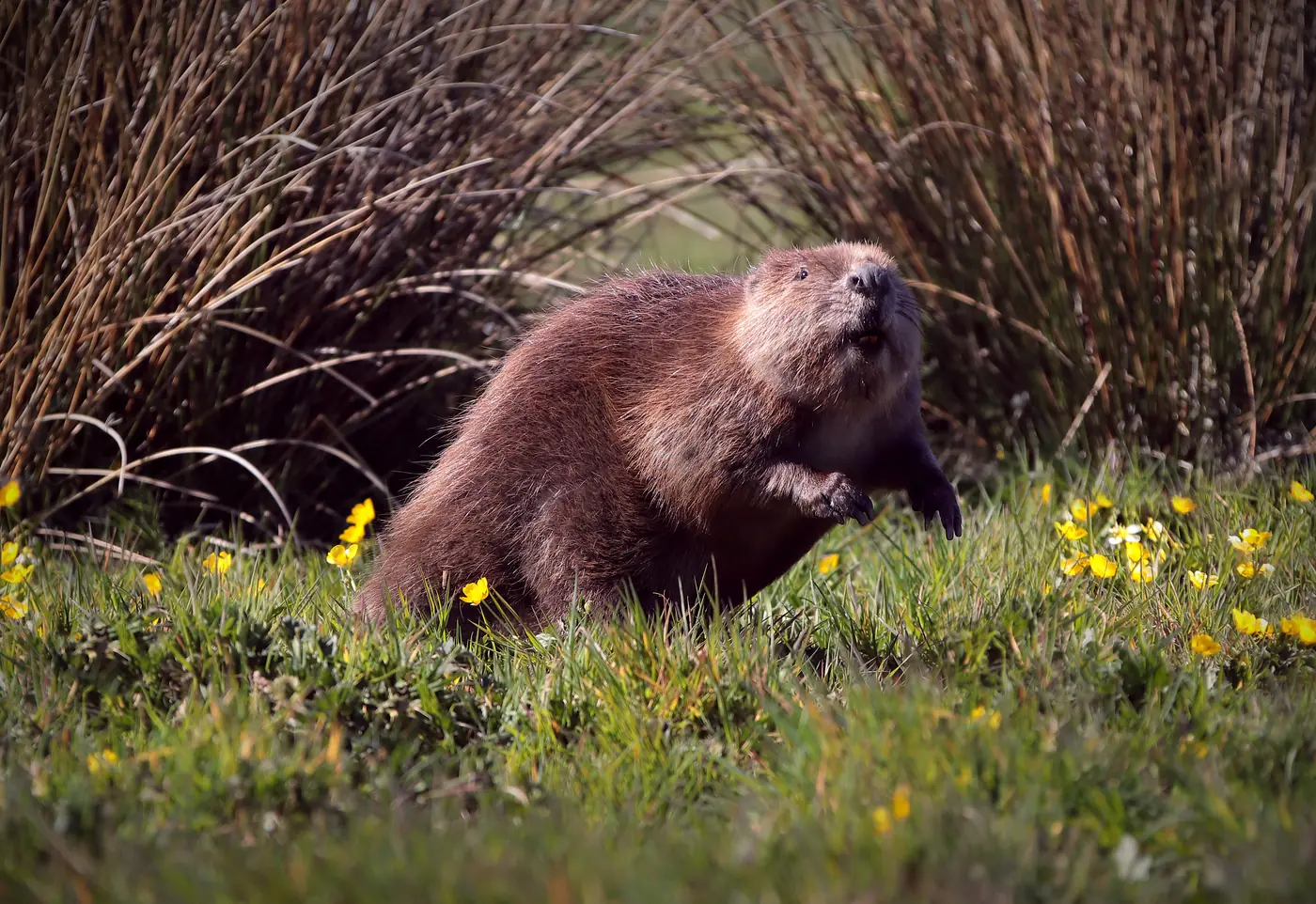 A Eurasian beaver photographed at West Country Wildlife in Devon; this photograph illustrates the species.
Credit: Charlie Marshall / Wikimedia Commons, CC BY 2.0.
A Eurasian beaver photographed at West Country Wildlife in Devon; this photograph illustrates the species.
Credit: Charlie Marshall / Wikimedia Commons, CC BY 2.0.

The Return of Beavers to England
The return has taken place gradually. A five-year licensed trial began on Devon’s River Otter in 2015, allowing researchers to study a wild population as it bred and spread through the river system. At the end of the trial in 2020, the government allowed the beavers to stay permanently and expand their range naturally.[1] This gave the population a continuing place in the English countryside.
Elsewhere, projects introduced beavers into fenced enclosures. These provided opportunities to observe their effects within defined areas, but a wider return required an approach to animals moving through landscapes shared by many landowners.
In 2025, the government introduced a broader policy for licensed wild releases in England and the management of existing wild populations.[3] Releases have continued, including a family and a pair at the National Trust’s Holnicote Estate in Somerset in 2026.[4] England’s beaver recovery now includes animals in enclosures, established wild populations and newly released animals, each living under different conditions.
Beaver Dams and Changing Rivers
Beavers build dams because deeper water can help keep them safe. They move well through water but are less agile on land, so a deeper pool provides somewhere to retreat. If a stream or ditch is too shallow, they can raise its water level using a dam made from wood, mud and other materials. Water still passes through the dam, but a pond develops behind it.[5]
The dam serves a different purpose from the animal’s home. Beavers shelter in bank burrows or lodges, often reached through underwater entrances. Deepening the surrounding water helps maintain that sheltered access. Where suitable deep water already exists, beavers may have little need to build a dam.
The resulting changes extend beyond the pond. Higher water levels can push water sideways into adjoining ground, reconnecting a channel with parts of its floodplain. As beavers dig and maintain their surroundings, a simple watercourse can become a more varied arrangement of pools, channels and wet margins.[2]
As beavers make their surroundings suitable for themselves, they also help shape the river and create conditions that can support ecological recovery. This is one way rewilding can work through the behaviour of the animals being restored.
Slower Floods and Stored Water
When rain falls, the ponds, dams and wetland vegetation can hold water temporarily or slow its movement downstream. Because the water arrives over a longer period, the highest flow below the wetland can be reduced.
At an enclosed Devon site, 13 beaver dams created ponds holding roughly 1,000 cubic metres of water. Monitoring reported an average reduction of about 30% in peak discharge between the inflow and outflow during the storm events studied.[6] This was a measurement at a particular site, rather than a prediction of how much beavers would reduce flooding across England.
Across four English sites and more than 1,000 storm events, a separate study found an overall pattern of lower peak flows and a longer delay between peak rainfall and peak river flow.[7] These findings support using beavers as part of natural flood management, although the effect farther downstream still needs to be considered for each project. It depends on the arrangement of dams, the shape of the valley and the size of the storm.
Ponds and wetter soils may also retain water into dry periods, after the rain has stopped. However, their effect on downstream flows varies between locations.[8] A beaver wetland that stays wet during a drought can provide valuable habitat without necessarily keeping the whole river flowing.
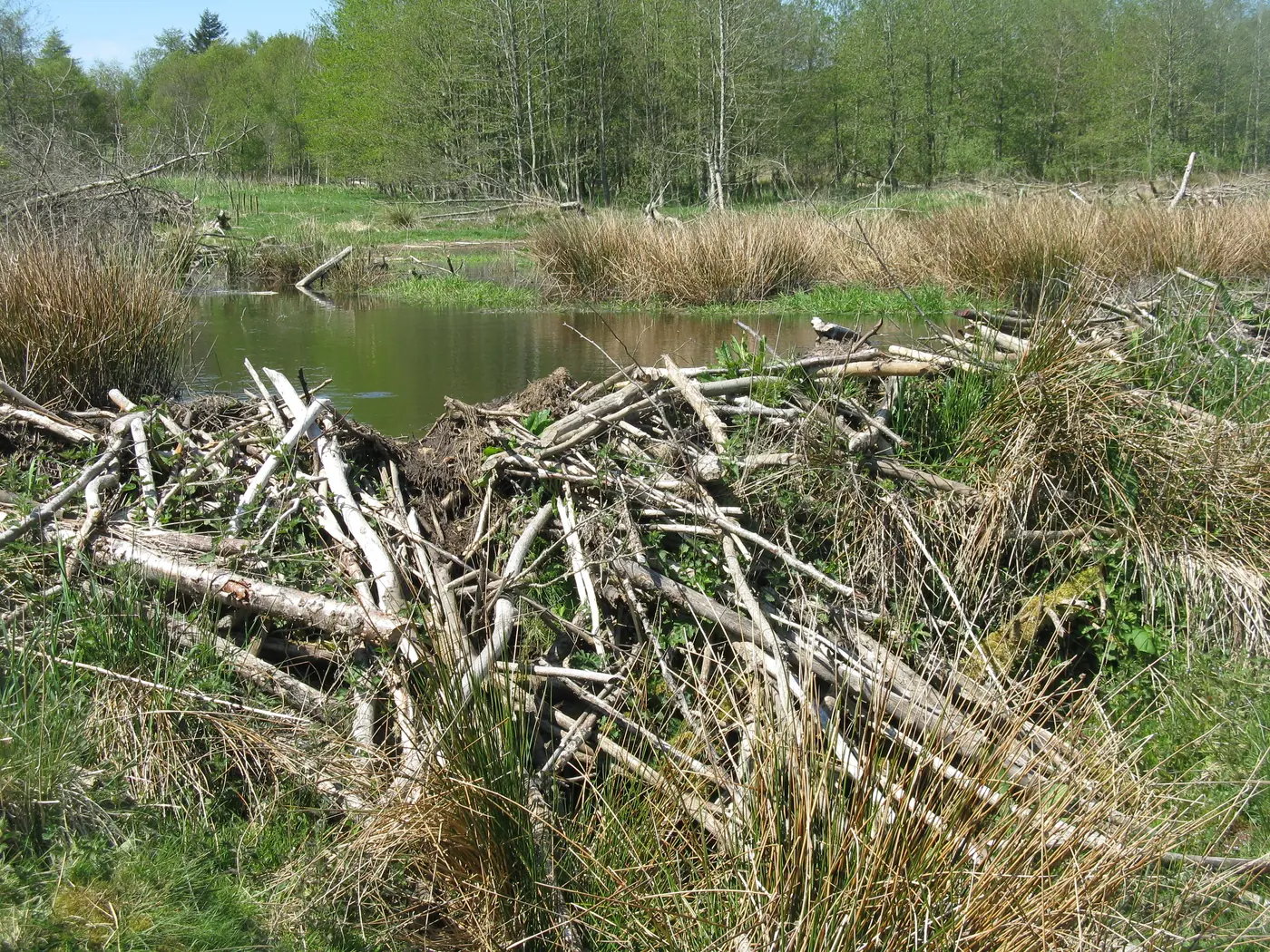 A beaver dam at Gauldwell Wood in Scotland illustrates the pond-building process also seen at English sites.
Credit: M J Richardson / Geograph, via Wikimedia Commons, CC BY-SA 2.0.
A beaver dam at Gauldwell Wood in Scotland illustrates the pond-building process also seen at English sites.
Credit: M J Richardson / Geograph, via Wikimedia Commons, CC BY-SA 2.0.

Cleaner Water Through Wetlands
Slowing the water can also change what travels downstream. As soil particles settle in the ponds, some of the nutrients attached to those particles are removed from the flowing water with them.
Measurements at the enclosed Devon site found that its 13 ponds held approximately 100 tonnes of sediment, including about one tonne of nitrogen. Researchers estimated that more than 70% of the sediment came from the intensively managed grassland upstream; the rest had been redistributed within the site.[9] The ponds were intercepting material that might otherwise have travelled farther through the river system.
Water monitoring at the same project recorded lower concentrations of suspended sediment and certain nutrients leaving the site than entering it.[6] Together, these findings show how beaver wetlands can help limit the movement of agricultural pollution.
The sediment remains in the pond, however, and what happens to it over time depends on how the wetland develops and whether it is disturbed.[9] Wetland recovery therefore works alongside efforts to keep soil and excess nutrients out of streams. Preventing pollution upstream reduces what enters the water, while ponds can retain some of the material already moving through it.
Wildlife Around the Water
When beavers spread water across the ground and open gaps in tree cover, they change how much light and moisture different areas receive. Wetland plants can grow where conditions become suitable, while ponds and vegetated margins offer places for aquatic insects and amphibians to feed and breed.[2] Having this range of conditions can support wildlife with different needs.
Some of those opportunities extend above the water. Many aquatic insects spend their early lives underwater before emerging as flying adults, becoming food for bats. In a British comparison of a beaver-colonised site with a similar nearby site, bat activity was about 43% higher where beavers were present, alongside substantially more aquatic invertebrate prey.[10]
The measurement was of bat activity, so it does not mean the bat population increased by 43%. It does suggest a connection between the new aquatic habitat and feeding opportunities for animals above the water, where emerging insects become available as prey.
The benefits also differ among species. Pond creation favours some animals, while changing conditions for others that depend on flowing water. Fish responses are particularly variable: beaver habitats can provide useful resources, but dams can hinder movement in some circumstances.[8] Restoration therefore needs to consider which species use a river and whether they can still reach the habitats they need.
Living With Nature’s Engineers
These changes can create difficulties for people living nearby. Water that supports a new wetland may also flood agricultural land, while tree felling and burrowing can damage particular trees, banks and infrastructure.[11] Managing these effects is part of making room for beavers in a shared landscape.
England’s management guidance begins with expert advice and making space beside waterways. Where problems remain, measures can include protecting trees and fencing vulnerable areas, with licensed intervention available for certain activities affecting dams, lodges or burrows.[11] The appropriate response depends on the site and the protection afforded to beavers and their breeding and resting places.
Support must continue after the release itself. England’s wild-release policy requires new projects to plan for at least ten years and provide for a transition to longer-term management.[3] For neighbouring communities, that commitment matters: they need to know who will respond when an animal’s activity begins affecting their land.
As beavers continue changing river corridors, people will need to decide where land can become wetter and how neighbouring livelihoods can be supported. The extent of their return depends partly on these decisions and on whether communities can continue living alongside the animals after the initial release.
Sources
- Five-year beaver reintroduction trial successfully completed
- Beaver: Nature’s ecosystem engineers
- Wild release and management of beavers in England
- National Trust to release wild beavers in Somerset in landmark move for UK nature recovery
- Beaver
- Eurasian beaver activity increases water storage, attenuates flow and mitigates diffuse pollution from intensively-managed grasslands
- Beaver dams attenuate flow: A multi-site study
- A global review of beaver dam impacts: Stream conservation implications across biomes
- Sediment and nutrient storage in a beaver engineered wetland
- Beneficial impacts of Eurasian beaver (Castor fiber) reintroduction on bat communities and aquatic macroinvertebrate prey: a case study from lowland Britain
- Beavers: managing beaver activities in England