Arctic Tundra Wildfires Reach 3,000-Year High
New research shows that parts of northern Alaska are experiencing wildfire activity at levels not seen for thousands of years, signaling a major shift in Arctic ecosystems.
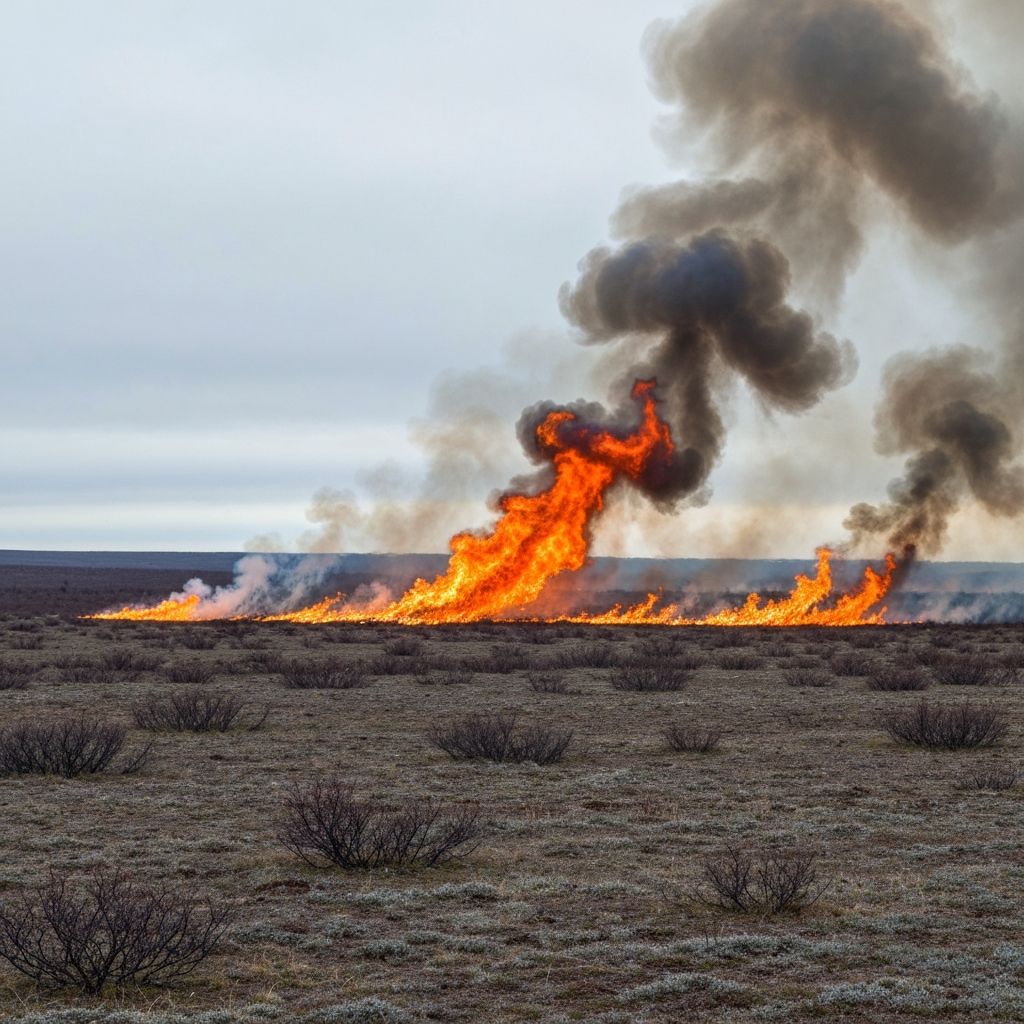
For most of human history, the Arctic tundra was not a place defined by wildfires. Cold temperatures, wet peat soils, and low plant growth helped limit how often fires could start and spread. New research now shows that this is no longer the case. Parts of northern Alaska are experiencing wildfire activity at levels that have not occurred for thousands of years. This signals a major shift in how Arctic ecosystems are responding to climate change.
Scientists examined peat cores taken from multiple tundra locations to reconstruct long-term fire patterns. These peat layers contain charcoal and plant material that act as a record of past fires and environmental conditions. For nearly two millennia, fire activity remained very low. There were brief periods of slightly higher fire activity, but overall the tundra stayed too wet and cold to burn frequently. That balance has now changed.
In the last century, rising temperatures have dried Arctic soils and allowed woody shrubs to spread across the tundra. Shrubs provide more fuel, while drier soils make it easier for fires to ignite and spread. Since the mid-1900s, wildfire activity has surged to levels higher than anything seen in the 3,000-year record. Satellite data confirms that fires have become more frequent and more widespread in recent decades.
These changes also suggest that Arctic fires may be burning hotter and consuming more fuel than before. Hotter fires can damage peat soils, which store large amounts of carbon. When peat burns, carbon that has been locked away for thousands of years is released into the atmosphere. This creates a dangerous feedback loop: warming leads to more fires, and more fires release more carbon, which increases warming even further.
The shift toward a more fire-prone Arctic has serious consequences for ecosystems, Indigenous communities, and global climate systems. It shows that climate change is not only affecting familiar fire regions. It is transforming landscapes that were once naturally protected from frequent burning. As the Arctic continues to warm, fire is becoming a new and powerful force reshaping the far north.