Arctic Sea Ice and the Winter That Failed to Rebuild It
During winter, the Arctic Ocean loses heat and sea ice can spread across open water and thicken beneath the snow. This seasonal growth helps determine how much ice remains by spring and what condition it is in before melting begins…
During winter, the Arctic Ocean loses heat and sea ice can spread across open water and thicken beneath the snow. This seasonal growth helps determine how much ice remains by spring and what condition it is in before melting begins again.
This winter, that recovery again fell short. Arctic sea ice reached its winter maximum on March 15 at 14.29 million square kilometres, statistically tied with last year's peak for the lowest maximum in the satellite record, which began in 1979. Even after months of freezing, the ice cover was unusually small for the time of year. [1]
Freezing temperatures brought ice back, but the cover did not extend as far as it once did. Understanding the weak recovery involves both the heat that the ocean must lose and the thickness and age of the ice that remains from earlier years.
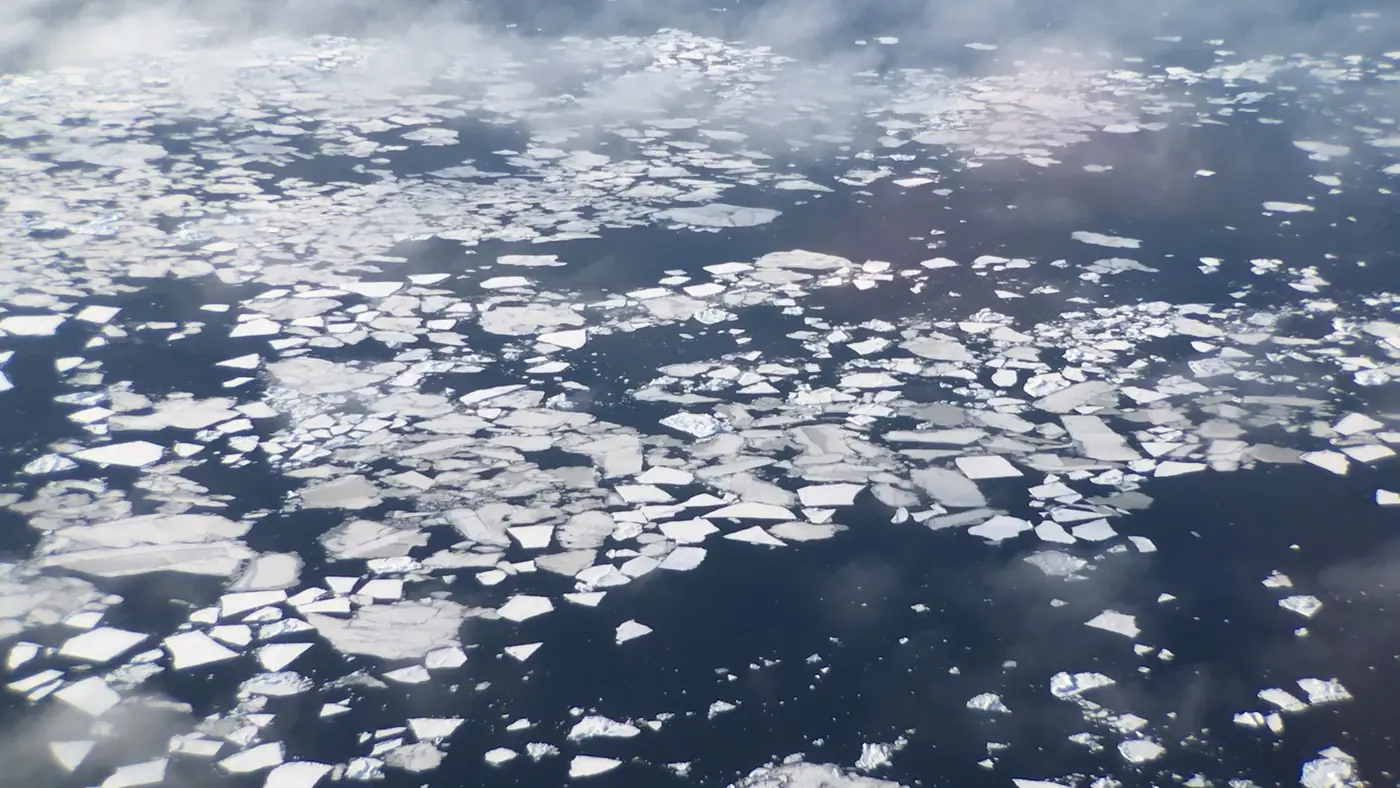 Spring sea ice north of Svalbard, filmed during NASA's Operation IceBridge in April 2017.
Credit: NASA's Goddard Space Flight Center; videography by Jefferson Beck (USRA). Still frame from expedition footage.
Spring sea ice north of Svalbard, filmed during NASA's Operation IceBridge in April 2017.
Credit: NASA's Goddard Space Flight Center; videography by Jefferson Beck (USRA). Still frame from expedition footage.
Arctic Sea Ice at Its Winter Maximum
The winter maximum measures the ice cover’s greatest extent during the season. Scientists count ocean areas with at least 15 percent ice coverage, so the total includes water between floes as well as the ice itself. It does not mean the entire area is one continuous frozen sheet. [2]
This winter's maximum was about 1.3 million square kilometres below the 1981–2010 average. [2] It was also so close to last year's low that scientists count the two as a tie. The National Snow and Ice Data Center, or NSIDC, treats maxima within 40,000 square kilometres of each other this way, so the small difference doesn't amount to a separate record. [1]
Extent does not measure how much frozen water is present, since a large area of thin ice can contain less than a smaller area of thick ice. NASA’s observations showed thinner ice across much of the Arctic this winter, particularly in the Barents Sea. Both the reduced extent and the limited thickness contributed to concern about the recovery. [2]
The Heat Winter Must Remove
Seawater must cool to its freezing point before ice can form. After a layer develops, more ice grows beneath it as heat passes through the existing ice into the air. The amount of growth depends on how cold the weather is and how long those conditions continue. [3]
A warmer ocean takes longer to lose the heat needed for freezing, while warmer air slows that heat loss even when it remains below freezing. A winter that feels very cold can still allow less growth than an even colder one. Snow also insulates the surface, making it harder for heat below the ice to escape. [3]
Heat moves through thin ice more easily than thick ice, allowing the thin layer to grow quickly during winter. Open water can also freeze rapidly once it has cooled enough. NSIDC describes this as a partial winter catch-up, which can replace some summer losses and helps explain why low summer ice does not always lead to an equally poor winter recovery. [4]
A Weak Recovery at the Arctic's Edges
The limited recovery was particularly visible around the Arctic’s edges. Satellite images near the maximum showed broken ice and broad areas of open water in the Barents Sea, on the Atlantic side. Thickness measurements showed that some remaining ice was very thin, while other areas had lost their cover. [5]
Weather arriving from the North Atlantic can carry warm, humid air into the Barents Sea, making it harder for ice to last. NASA pointed to these broad wind patterns as an important reason winter ice varies there. On the Pacific side, the Sea of Okhotsk also contributed to the low total. Its seasonal ice is strongly affected by local winds, which can push floes together or spread them apart. [5]
These differences make it difficult to explain the whole winter through one temperature reading or weather event. Local weather shapes each season, while the warming climate makes it harder for ice to persist over time. The IPCC concludes that human influence, mainly through increased greenhouse gases, was very likely the main cause of Arctic sea-ice loss since 1979. That explains the longer decline, though it doesn't tell us exactly how much each factor contributed to this winter's shortfall. [6]
The Ice One Winter Cannot Replace
Older ice takes more than one winter to develop. Newly formed ice must survive a summer to become multiyear ice, after which later winters can add thickness. Winds and currents also push pieces together into thicker formations. Under the same melting conditions, this thicker ice takes longer to disappear when warm weather returns. [7]
Much of that older ice was already missing before winter began. NOAA's Arctic Report Card found that only about 95,000 square kilometres of ice older than four years remained at last September's minimum, about 95 percent below the average for 1985–2004. That loss refers specifically to the oldest ice, which once made up a much larger part of the Arctic's cover. [8]
With less old ice remaining, more of the cover is facing its first summer. Winter growth can improve conditions for that year, but rebuilding older ice requires survival through repeated melt seasons. An expanding area on a map can therefore appear well before much of the thicker, older cover has returned. [7][8]
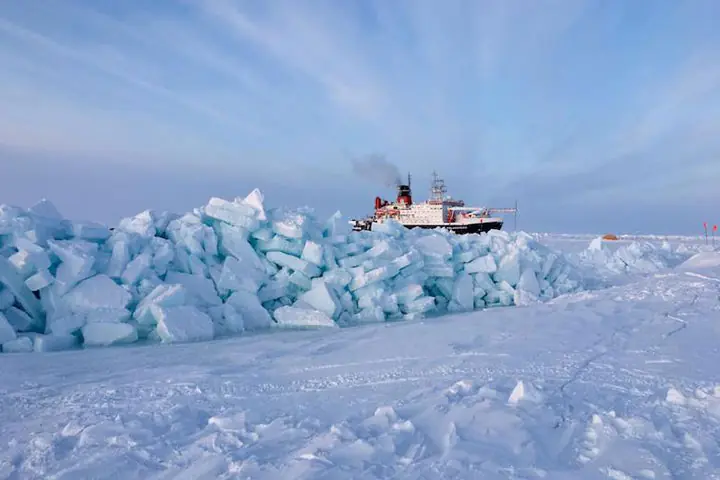 A pressure ridge photographed near the research icebreaker Polarstern during the 2019–20 MOSAiC expedition. Moving ice can build ridges when floes press together.
Credit: Steven Fons / NASA GSFC.
A pressure ridge photographed near the research icebreaker Polarstern during the 2019–20 MOSAiC expedition. Moving ice can build ridges when floes press together.
Credit: Steven Fons / NASA GSFC.
Consequences Beyond the Ice Edge
Ice reflects much of the sunlight reaching it, while dark ocean water absorbs more energy. When melting exposes water, the ocean can store extra heat that must be released before it freezes again in autumn. Summer ice loss can therefore affect the starting conditions for the next winter’s growth. [9]
The ice is also habitat and a place to find food. Algae growing in and around it support other marine life, seals rely on it for parts of their life cycle, and polar bears use it for hunting. The timing and location of the ice matter to these animals, so an Arctic-wide total may miss changes in a particular breeding or feeding area. [10]
Those local conditions matter for people, too. Many Arctic Indigenous communities use sea ice to travel and reach places where they hunt or fish. Where they can go depends on how stable the ice is and how long it lasts. [10] Along the coast, less ice also gives waves more room to reach the shore. If that happens where frozen coastal ground is already thawing, the land can erode more quickly. [9]
These coastal effects do not depend on a large direct contribution to sea-level rise from melting sea ice. Floating ice already displaces seawater, so its melting adds very little directly to sea level. Its loss leaves coasts more exposed to waves and changes how the ocean absorbs and releases heat. [9]
The Seasons After a Weak Winter
A low winter maximum gives scientists reason to worry about the melt season ahead, but it doesn't settle how that season will end. Spring and summer temperatures, clouds, winds, and where the thickest ice remains all affect how much survives. [4] Last year showed this clearly: after a record-low winter maximum, the summer minimum ranked tenth lowest. [8]
Weather has made a difference again this summer. In its September 3 update, NSIDC reported that relatively cool, cloudy conditions over parts of the Arctic Ocean had delayed the start of melting in the Beaufort and Chukchi Seas. August's average ice extent ranked seventh lowest in the satellite record, with the final September minimum still ahead when the update was published. [11]
Some seasons will have more ice than others, even as the longer decline continues. The IPCC expects the Arctic to have a practically ice-free September at least once before 2050 under all five emissions scenarios it examined. The more the planet warms, the more often this is expected to happen. “Practically ice-free” means an average sea-ice area of less than one million square kilometres during September; ice would still return in winter. [12]
Autumn freezing begins the rebuilding process, but the ice needs time to spread and thicken, and some must survive summer to become older cover. Winter continues to support that growth. How much lasts between years increasingly depends on how much further the climate warms. [6][12]
Sources
- Arctic sea ice record low maximum strikes again
- Arctic Winter Sea Ice Ties Record Low, NASA, NSIDC Scientists Find
- Science of Sea Ice
- Why are scientists conservative about Arctic sea ice loss?
- Barents Sea Tied to Low Arctic Sea Ice
- Chapter 3: Human Influence on the Climate System
- Why is Arctic sea ice getting younger?
- Sea Ice
- What are the impacts of Arctic sea ice loss?
- Why Sea Ice Matters
- Arctic zigs; Antarctic zags
- Summary for Policymakers