A Megaquake Could Trigger a Chain Reaction Down the West Coast
New research suggests that a massive Cascadia earthquake could potentially trigger a second major quake on the San Andreas Fault, creating a dangerous seismic chain reaction.
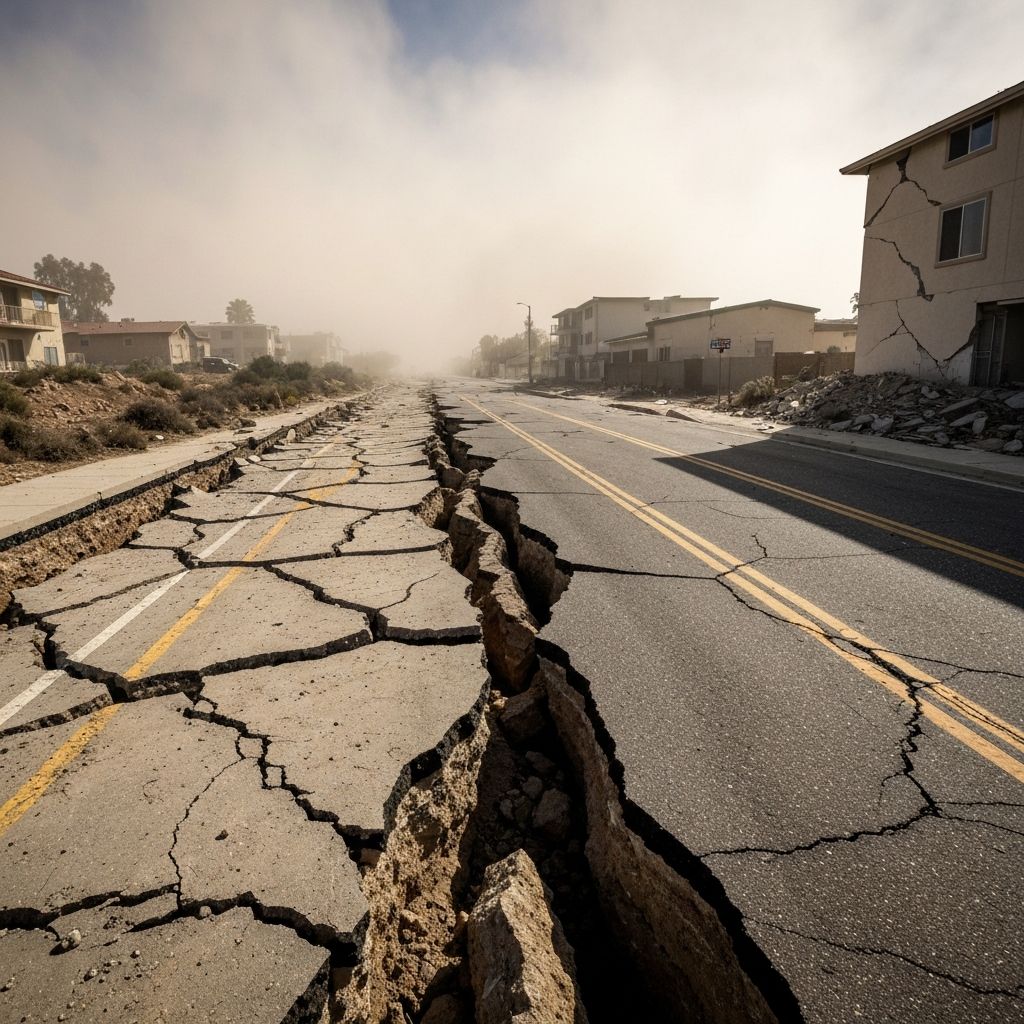
Most people think about earthquakes as isolated events. One fault slips, the ground shakes, and then things slowly settle. New research suggests that this picture may be too simple. Scientists have found evidence that a massive earthquake in the Pacific Northwest could potentially trigger a second major quake in California, creating a dangerous one-two seismic punch along the West Coast.
The focus is on two enormous fault systems. In the Pacific Northwest, the Cascadia subduction zone is capable of producing magnitude 9 earthquakes, similar to the 2011 Japan quake. Farther south, the San Andreas Fault marks the boundary between the Pacific and North American plates and is responsible for some of California's most destructive earthquakes, including the 1906 San Francisco event.
What makes this study unusual is how the evidence was discovered. During a research cruise in the late 1990s, a navigation error sent a ship to the wrong location off northern California. Instead of discarding the mistake, researchers collected sediment cores from the seafloor anyway. Those cores ended up holding a surprising record of past earthquakes.
The sediments showed repeated pairs of underwater landslide deposits, called turbidites. These layers form when earthquakes shake loose sediment on the seafloor, sending it cascading down submarine canyons. In many cases, the researchers found two distinct deposits that appeared to have formed very close together in time.
By dating these layers, scientists realized that the paired deposits often matched known Cascadia earthquakes and San Andreas events. The pattern suggests that a huge Cascadia quake may have happened first, followed shortly after by movement on the San Andreas Fault. In some cases, the second quake may have occurred within hours of the first.
If this pattern holds true, it means the next major Cascadia earthquake might not be the end of the disaster. It could increase stress on nearby faults and raise the chances of a major California quake soon after. That kind of cascading event would dramatically increase risks to infrastructure, emergency response, and millions of people along the coast.
This research does not mean a chain reaction is guaranteed. Earthquake systems are complex, and many factors control whether stress transfers from one fault to another. But the findings challenge the idea that faults always act independently. Instead, they suggest that large earthquakes can be part of a connected system, where one event can make another more likely.
For the West Coast, that means hazard planning may need to think beyond single faults and single earthquakes. The real risk could be in how these massive systems interact.